Quick Answer
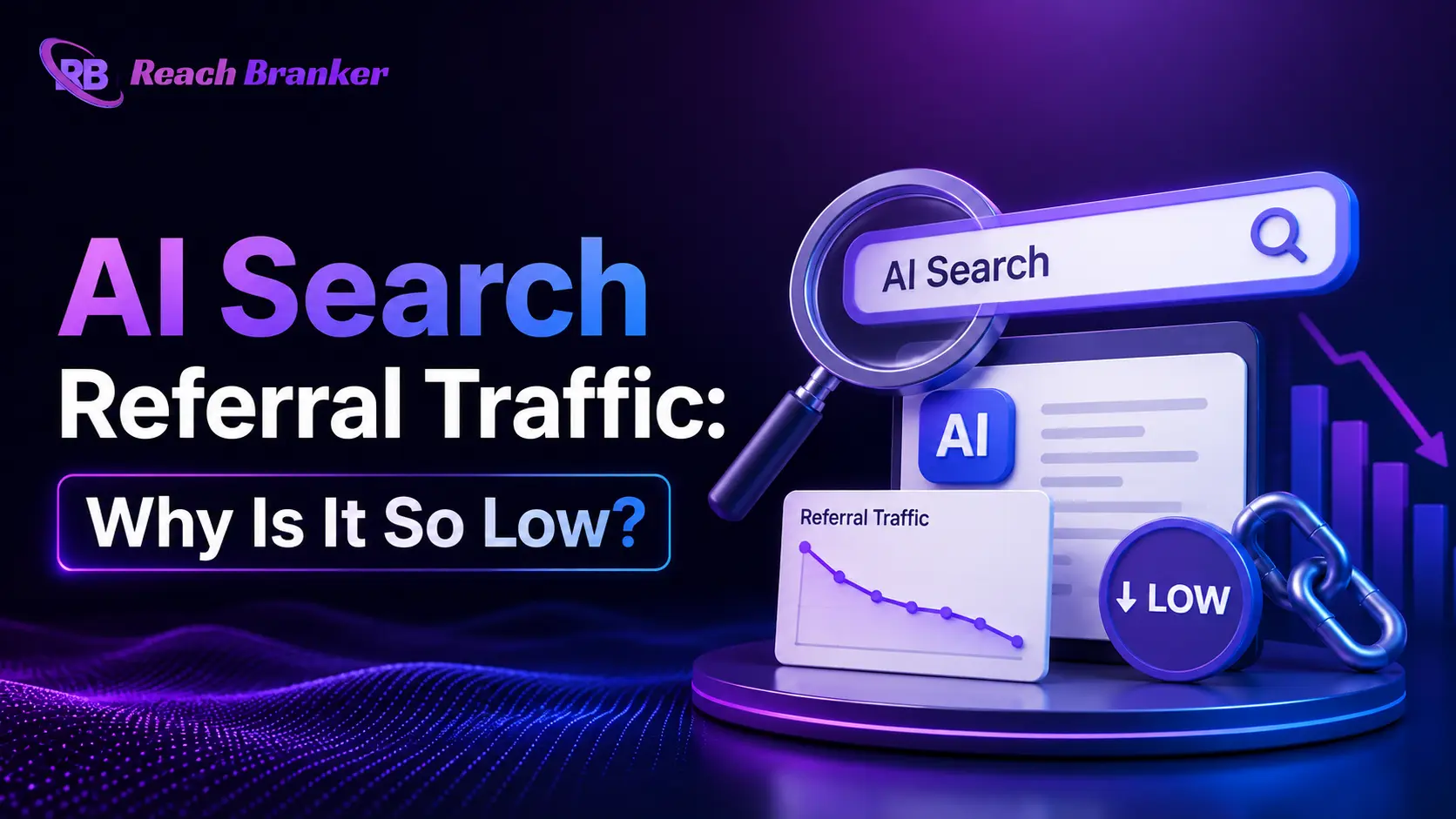
AI search referral traffic, the direct website visits coming from platforms like ChatGPT, Perplexity, Gemini, and Google AI Overviews, remains genuinely low even for frequently cited sources, commonly representing well under one percent of total site traffic even for publishers cited often. This happens because AI generated answers frequently satisfy the user’s question directly within the conversation itself, removing much of the reason to click through to the original source. The practical response is not to dismiss AI search visibility as worthless, but to measure its value through brand awareness, entity recognition, and downstream branded search rather than expecting it to function as a significant direct traffic channel.
Key Takeaways
- AI search referral traffic remains a genuinely small share of total traffic for most sites, even those cited frequently across AI platforms.
- This low referral rate reflects how AI generated answers often satisfy the user’s question directly, reducing the practical need to click through.
- The real value of AI search visibility currently lies in brand awareness and entity association, not direct traffic generation.
- Different AI platforms show meaningfully different referral behavior, with some sending more click through traffic than others.
- Measuring AI search value requires tracking branded search growth and citation frequency, not expecting referral traffic to resemble traditional search traffic patterns.
Just How Low Is AI Search Referral Traffic
Publisher level data and independent analyses have consistently shown that referral traffic from AI platforms remains remarkably small relative to how frequently many of these same publishers are actually cited within AI generated responses. Sites cited regularly by ChatGPT, Perplexity, and similar tools frequently report AI referral traffic representing well under one percent of their total site visits, a strikingly small figure given how much industry attention AI search visibility currently receives.
This gap between citation frequency and actual referral traffic is one of the more genuinely important, if underdiscussed, realities of the current AI search landscape, and it should meaningfully shape how businesses set expectations for what AI search visibility investment can realistically deliver in the near term.
This pattern has been consistent enough across multiple independent analyses and publisher reports that it should be treated as a genuine, current baseline for planning purposes, not dismissed as an early, temporary anomaly likely to resolve itself imminently.
Why AI Generated Answers Reduce the Need to Click
The core reason for this gap is straightforward once stated directly. AI generated answers are specifically designed to synthesize a complete, useful response within the conversation itself, which for a large share of queries genuinely satisfies what the user needed to know without requiring them to visit any external source to get additional detail.
This differs fundamentally from a traditional search results page, which has always required a click to actually access the underlying content, whereas an AI generated answer often delivers the practical value of that content directly, leaving considerably less functional reason for the user to click through afterward, even when a source link is provided alongside the answer.
Read More: Why Reddit Matters for SEO and AI Search Visibility in 2026
Does This Mean AI Search Visibility Is Not Worth Pursuing
Not necessarily, though it does mean AI search visibility should not be pursued primarily as a direct traffic strategy, at least not with current referral patterns. The genuine value currently available through AI search visibility lies elsewhere, in brand awareness, in being the trusted, cited source shaping how an AI system frames information about your industry or product category, and in the broader entity association that appears to influence how confidently these systems reference your brand across future queries.
This is a genuinely different value proposition than traditional SEO traffic, closer in some respects to brand advertising or PR value than to direct response marketing, and businesses should evaluate AI search investment against this more accurate value proposition rather than expecting it to replicate traditional organic traffic patterns.
How Different AI Platforms Compare on Referral Behavior
Referral behavior varies meaningfully across different AI platforms, reflecting differences in how each product is designed and how explicitly it surfaces source links to users.
- Perplexity generally shows relatively higher click through behavior compared to some alternatives, given its interface explicitly displays and emphasizes cited sources as a core part of the user experience, making the underlying sources more visible and clickable by design.
- ChatGPT’s referral behavior varies depending on whether a specific query triggers its search enabled mode with visible citations, versus a purely conversational response drawing on training data without explicit source attribution, meaning referral patterns can differ considerably even within the same platform depending on query type.
- Google’s AI Overviews sit within the broader search results page alongside traditional organic listings, meaning referral behavior here interacts with traditional search behavior in ways that are somewhat different from a standalone AI chat platform’s referral pattern.
What to Actually Measure Instead of Direct Traffic
Given the genuine limitations of referral traffic as a meaningful metric for AI search visibility currently, several alternative measurements provide a more accurate picture of actual value being generated.
- Citation frequency, how often your brand or content is directly referenced across a realistic set of queries tested manually or through a structured audit process, offers a direct measure of visibility independent of whether that visibility converts into a click.
- Brand mention sentiment and framing, understanding not just whether you are mentioned but how favorably and accurately, provides insight into whether AI visibility is genuinely working in your favor rather than simply existing.
- Branded search volume growth over time offers a meaningful downstream proxy, since genuine brand awareness built through AI visibility, even without direct clicks, plausibly contributes to more people searching for your brand directly through traditional search channels later.
Tracking Branded Search as a Downstream Signal
Branded search volume, how often people search directly for your brand name rather than a generic category term, deserves particular attention as a downstream indicator of AI search visibility value. If AI platforms are genuinely building awareness of your brand through frequent, favorable citation, this awareness plausibly manifests later as increased direct searches for your brand specifically, even among users who never clicked through from the original AI generated response.
This metric requires a longer measurement window than traditional campaign reporting typically uses, since the connection between AI visibility today and branded search growth weeks or months later is inherently more indirect and harder to attribute precisely than a direct click-through conversion path.
Read More: GEO vs. SEO: How AI Search Is Changing Content and Link Building in 2026
How This Might Change Over Time
It is reasonable to expect AI search referral patterns to evolve as these platforms mature and as user behavior adapts to conversational search as a genuinely established research method rather than a novelty. Some platforms have already begun experimenting with more prominent source attribution and click through encouragement, suggesting the current low referral pattern is not necessarily a permanent, fixed characteristic of AI search generally.
Businesses investing in AI search visibility today should treat current referral limitations as a realistic starting point for expectations, not as a permanent verdict on whether this channel will ever meaningfully contribute direct traffic in the future.
The ReachBranker Measurement Approach for AI Visibility
Rather than reporting AI search performance purely through referral traffic, which would understate its actual value given currently available data, we track a combination of citation frequency across a structured query set, qualitative brand framing and sentiment within AI generated responses, and branded search volume trends over a meaningful, longer measurement window, giving clients a genuinely accurate picture of value rather than a misleadingly small traffic number.
A Practical Example: Reading an Honest AI Visibility Report
Consider a quarterly report showing a business was cited across roughly forty percent of a structured set of thirty realistic customer queries tested across major AI platforms, while direct referral traffic from those same platforms totaled under fifty site visits for the entire quarter. Reported using referral traffic alone, this would look like a disappointing, low value quarter. Reported alongside citation frequency and a meaningful eight percent increase in branded search volume compared to the same period a year earlier, a more complete, considerably more encouraging picture emerges.
This is the practical difference proper AI visibility measurement makes, the same underlying quarter of work can look like a failure or a genuine success depending entirely on which metrics are used to evaluate it, which is exactly why referral traffic alone should never be the sole measure of AI search visibility value.
Common Mistakes When Evaluating AI Search Value
- Judging AI search visibility investment purely by referral traffic, then concluding the effort was not worthwhile based on a metric that was never likely to capture the actual value being generated.
- Expecting AI search referral behavior to eventually match traditional organic search referral patterns without acknowledging the fundamentally different mechanics of how AI generated answers satisfy user intent.
- Ignoring citation frequency and brand framing entirely, missing genuine visibility signals simply because they do not show up as a traffic number in standard analytics reporting.
- Treating every AI platform as behaving identically in referral terms, when meaningful differences exist between platforms based on how each surfaces and emphasizes source citations.
- Failing to measure branded search volume over an appropriately long window, missing a genuinely meaningful downstream signal by only looking at short term, direct attribution metrics.
Expert Tips for Realistic AI Search Reporting
- Set stakeholder expectations early that AI search visibility should be measured primarily through citation frequency and brand signals, not direct referral traffic, avoiding a mismatch between what is measured and what the investment can realistically deliver.
- Run a structured, repeated citation audit across your priority queries rather than relying on occasional, anecdotal checks, building a genuine, trackable data set over time.
- Monitor branded search volume specifically, treating meaningful growth here as a legitimate, if indirect, signal of AI visibility value even without corresponding referral traffic.
- Differentiate reporting by platform where meaningful referral differences exist, rather than reporting AI search traffic as a single, undifferentiated category.
- Revisit this measurement approach periodically, since referral patterns and platform behavior continue to evolve, and today’s realistic expectations may need updating as these platforms mature.
A Note on Setting Internal Expectations Early
Much of the frustration businesses experience with AI search visibility investment traces back to expectations set before the work even begins, often based on comparisons to traditional SEO traffic that were never realistic given how differently AI platforms currently handle referral behavior. Setting accurate expectations upfront, explaining clearly to stakeholders that citation frequency and brand signal, not referral traffic, are the primary metrics this investment should be judged against, prevents the disappointment that comes from measuring a genuinely successful campaign against the wrong yardstick. This conversation is considerably easier to have before a campaign begins than after several months of work produces a citation frequency stakeholders were not prepared to value appropriately.
Read More: AEO Explained: How to Get Your Content Cited by ChatGPT, Gemini, and Perplexity
A Final Word on Playing a Longer Game
AI search visibility, evaluated honestly against current referral data, rewards patience and a longer measurement horizon considerably more than most digital marketing channels businesses are accustomed to evaluating. The connection between being cited today and seeing measurable brand impact months later is real but genuinely indirect, closer to the way sustained public relations or brand advertising investment compounds over time than to the immediate, attributable results digital marketers typically expect.
Businesses willing to invest with this longer, more patient framing tend to build genuinely durable AI search presence, while those expecting quick, directly attributable traffic gains are measuring this channel against a standard it was never realistically going to meet.
Conclusion
AI search referral traffic remains genuinely low even for frequently cited sources, a reality worth confronting honestly rather than glossing over with inflated expectations. This does not mean AI search visibility lacks value, it means the value currently available shows up primarily as brand awareness, entity association, and downstream branded search growth rather than direct, attributable website traffic.
Measuring AI search investment against an accurate understanding of what it currently delivers, rather than against traditional organic traffic expectations it was never likely to match, leads to more honest reporting and more sustainable, appropriately scoped investment in this genuinely important but still maturing channel.
Frequently Asked Questions
Why does ChatGPT send so little traffic even when it cites my content? +
ChatGPT’s conversational answers often satisfy a user’s question directly within the response, reducing the practical need to click through to the underlying source, even when that source is referenced or cited.
Is there any AI platform that sends meaningfully more referral traffic than others? +
Perplexity generally shows relatively stronger click-through behavior because it prominently displays cited sources, although overall referral volume remains modest compared with traditional search traffic.
Should I stop investing in AI search visibility given how low referral traffic currently is? +
Not necessarily. AI visibility can provide brand awareness and entity association even when direct referral traffic remains limited, so its value depends on your broader business goals.
How long should I wait before evaluating whether branded search growth reflects AI visibility efforts? +
A measurement window of several months to a year is generally more appropriate because the connection between AI visibility and branded search growth can be indirect and difficult to measure quickly.
Does low referral traffic mean AI Overviews specifically provide no SEO value at all? +
Not necessarily. Appearing in an AI Overview can provide meaningful visibility and trust signals even when the referral traffic captured through standard analytics remains modest.
Can I track AI search referral traffic accurately in standard analytics tools? +
Partially. Some AI platforms can appear as distinct referral sources, but attribution may be incomplete when traffic arrives through less clearly tagged referral paths.
Will AI search referral traffic likely increase over time as these platforms mature? +
This is plausible as some platforms experiment with more prominent source attribution, although current referral data should be treated as a realistic present-day baseline.
Do industry-specific AI tools show different referral patterns than general-purpose platforms? +
Data for specialized AI tools is less widely available, but the same underlying principle may apply because conversational answers can satisfy the user’s query without requiring a website visit.
Should AI search visibility investment be paused entirely until referral traffic improves? +
This depends on your goals. If brand awareness and trusted source visibility matter, limited referral traffic does not eliminate the channel’s value. Businesses focused purely on direct traffic should weigh it against other channels.