Quick Answer
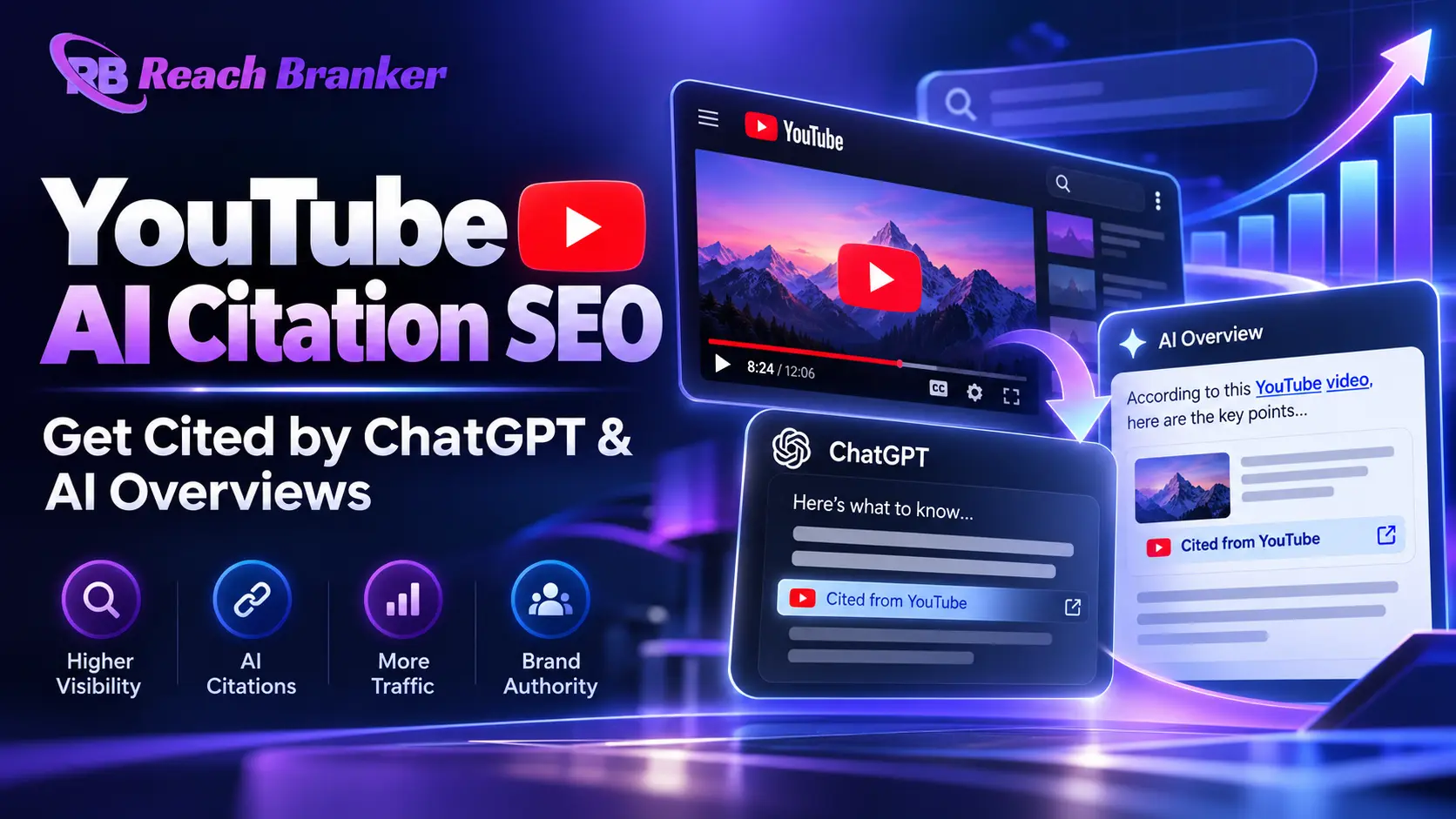
YouTube has become, by a wide margin, the most-cited video source across every major AI search platform in 2026. Independent citation-tracking studies place YouTube’s share of Google AI Overview citations somewhere between roughly 23% and 30%, depending on the dataset and month sampled, consistently outciting the next-largest video platform by a factor researchers describe as around 200 times. The mechanism is different from traditional YouTube ranking entirely: AI systems don’t watch video; they extract and cite from the transcript, so a video’s citation odds depend on transcript clarity, chapter structure, and how directly it answers a specific question, not on view count, likes, or subscriber numbers, which multiple studies found carry almost no relationship to citation likelihood. For any brand already investing in content, treating video as a transcript-driven GEO asset rather than a branding exercise is now one of the highest-leverage, least-contested opportunities in AI search optimization.
Key Takeaways
- YouTube’s share of Google AI Overview citations has been reported between roughly 23% and 30% across different 2026 studies (Surfer SEO’s May 2026 analysis of 46 million citations found 23.3%; a later August 2026 analysis found 29.5%), with the range reflecting genuine methodology and timing differences rather than a single settled figure, but every credible study agrees YouTube is the single most-cited video domain by a large margin.
- YouTube outcites the next-largest video platform by roughly 200 times, a gap multiple independent analyses converge on despite differing on YouTube’s exact citation percentage.
- Long-form video overwhelmingly dominates citations over Shorts. Studies from OtterlyAI and others consistently report somewhere between 94% and 96% of YouTube AI citations going to standard long-form videos, with Shorts capturing only a small remainder.
- View count, likes, and subscriber numbers show almost no relationship to citation likelihood. Otterly.ai’s analysis found a correlation of roughly -0.03 between popularity metrics and citation frequency, and a separate study found over 40% of cited videos had fewer than 1,000 views at the time they were cited.
- How-to and instructional content is the dominant category for AI video citation, consistently cited as the single largest content type across multiple studies, since a demonstration answers a process-based query more directly than a paragraph of text can.
- Different AI platforms draw on YouTube at different rates. One 2026 analysis found Perplexity sourcing roughly 38.7% of all its YouTube citations, ahead of Google AI Overview, AI Mode, and ChatGPT, suggesting video-citation behavior isn’t uniform across platforms.
- AI systems don’t watch your video, they read its transcript. This single fact should reshape how you think about video production: the spoken content, its clarity, and its structure matter more for AI citation than visual production quality.
Why Video Became a Primary AI Citation Source
For most of SEO’s history, video was treated as a supporting asset, something to embed under a blog post to lift time-on-page or add visual interest. That framing has become genuinely outdated. AI Overviews and AI Mode now regularly surface video citations and video carousels specifically for how-to, comparison, and process-based queries, because a demonstration answers that kind of question more directly and completely than a paragraph of text can. As AI Overviews have expanded to cover a growing share of Google searches, video has moved from a nice-to-have embed to one of the actual surfaces AI systems retrieve answers from.
The practical implication for any content team is significant: how you title, structure, and caption a video now genuinely affects whether your brand appears in an AI-generated answer, not just whether the video performs well within YouTube’s own recommendation system. Most brands are still treating video primarily as a branding and engagement exercise rather than a distinct search and citation asset, which is exactly the gap this creates an opportunity to close.
Read More: Google’s September 2026 Spam Update and the EEA Site Reputation Policy Change
What the Data Actually Shows (And Where Studies Disagree)
It’s worth being transparent about the state of the data here, because multiple independent studies have measured YouTube’s AI citation share using different methodologies, different time windows, and different query sets, and their headline numbers don’t perfectly agree. Treating this as a single settled statistic would overstate the precision of what’s actually known.
Surfer SEO’s analysis of 46 million AI Overview citations, published in May 2026, reported that YouTube accounted for approximately 23.3% of citations, ahead of Wikipedia at 18.4% and Google.com at 16.4%. A later analysis published in August 2026 put YouTube’s share at approximately 29.5% of Google AI Overview citations specifically, a meaningfully higher figure that likely reflects both a different sampling window and the genuinely fast pace at which AI Overview citation patterns have been shifting throughout 2026. A separate March 2026 study from Otterly.ai, analyzing more than 100 million citation instances, found that social and video domains together accounted for roughly 5.54% of all AI citations studied, with YouTube capturing 31.8% of that specific slice, a different and narrower denominator than the AI-Overview-specific figures above.
Despite the numerical spread, several findings hold consistently across every study reviewed: YouTube is, without exception, the most-cited video source by a wide margin, commonly described as outciting the next-largest video platform by roughly 200 times; long-form video dominates citation share over Shorts by a wide and consistent margin; and the trend across the year has been upward, not downward, with later 2026 measurements generally reporting a larger YouTube citation share than earlier ones. For practical planning purposes, treat “roughly a quarter to nearly a third of Google AI Overview citations” as a reasonable, appropriately hedged summary of where the data currently sits, while expecting the precise figure to keep moving as AI search surfaces continue to mature.
How Different AI Platforms Cite YouTube Differently
Citation behavior isn’t uniform across AI platforms, which matters if you’re trying to prioritize where to focus. One 2026 analysis from OtterlyAI found that Perplexity sourced approximately 38.7% of all tracked YouTube citations, more than any other single platform studied, including Google’s own AI surfaces. A separate breakdown reported Perplexity driving roughly 38.7% of YouTube citations, with Google AI Overview close behind at approximately 36.6%, AI Mode at 19.6%, and ChatGPT trailing at roughly 4.4%.
Separately, research covered by Adweek in January 2026, drawing on Bluefish data, found that YouTube had overtaken Reddit as the most-cited social platform across major large language models generally, at roughly 16% of LLM answers compared with Reddit’s 10%. YouTube has also been reported as the second most-referenced social platform overall in AI search behind only Wikipedia, and ahead of other social platforms by a meaningful margin.
The practical takeaway is that a video-citation strategy shouldn’t be built around Google AI Overviews alone. Perplexity in particular appears to draw on YouTube content at least as heavily, and the underlying optimization work, clear transcripts, strong chaptering, direct answers, benefits visibility across all of these platforms simultaneously rather than requiring separate strategies per engine.
Why Views and Subscribers Don’t Predict Citation
This is arguably the most actionable finding in the entire body of 2026 research on this topic, and it directly contradicts how most brands still think about video strategy. Otterly.ai’s analysis found a correlation of approximately -0.03 between a video’s views, likes, and subscriber count and how often it was cited by AI systems, a figure close enough to zero to say popularity metrics essentially don’t predict citation at all. Reinforcing this, a separate OtterlyAI study on YouTube citations specifically found that over 40% of videos cited by AI platforms had fewer than 1,000 views at the time they were cited.
The explanation fits naturally once you understand how AI citation actually works: these systems are evaluating transcript content for how clearly and directly it answers a specific question, not evaluating a video’s social proof or audience size the way YouTube’s own recommendation algorithm does. A small channel with a precisely structured, clearly spoken explainer video genuinely competes on equal footing with a massive channel’s video on the same topic, provided the smaller channel’s content answers the underlying question more directly and is structured in a way AI systems can parse cleanly.
For brands that have been reluctant to invest in video because they lack an existing large subscriber base, this finding substantially lowers the barrier to entry. AI citation is a content-quality and structure competition, not a popularity competition, at least based on everything the current data shows.
What Content Format and Category Win
- Long-form consistently dominates. Across multiple independent studies, somewhere between 94% and 96% of YouTube AI citations go to standard long-form videos rather than Shorts, a remarkably consistent finding across different research teams and time periods. This doesn’t mean Shorts have no value in a broader content strategy, but for AI citation specifically, longer, more thorough content is overwhelmingly what gets pulled into generated answers.
- How-to and instructional content leads by category. Multiple studies independently identify instructional and tutorial content as the single largest category for AI video citation, consistently described as not even a close contest against other content types. This tracks directly with why AI systems reach for video in the first place: a process-based question is answered more completely and more trustworthily by a demonstration than by a written description of the same steps.
- Depth and specificity outperform broad overviews. Content that genuinely covers a niche topic in unusual detail tends to perform particularly well for citation, since this is exactly the kind of granular, specific answer that a generated response benefits from quoting rather than paraphrasing from a shallower, more generic source.
How AI Systems Actually Extract From Video
A foundational fact worth internalizing before investing further in video for AI search: these systems do not watch your video. They work from the transcript, and from whatever structured metadata, chapters, and description text accompany it. This single fact should reshape video production priorities for anyone optimizing specifically for AI citation.
In practice, this means the spoken content itself, its clarity, specificity, and directness, matters more for citation purposes than visual production value, editing polish, or on-screen graphics. A well-spoken, clearly structured 20-minute video with accurate automatic captions and well-placed chapter markers is a genuinely strong AI citation candidate even without a large production budget. Conversely, a visually impressive video with vague, rambling narration and no chapter structure is a weak candidate regardless of its production quality, because the underlying transcript gives the extraction layer little clean, quotable material to work with.
Chapter markers and timestamps deserve particular emphasis here. Multiple analyses specifically note that videos including clear timestamps or chapter markers are more likely to be referenced and cited, since this structure effectively segments a long video’s transcript into discrete, addressable, directly citable sections, closely mirroring the way clear heading structure benefits written content for the same extraction purpose.
The Practical Optimization Checklist
- Prioritize long-form over Shorts for citation-focused content. Given the 94 to 96% long-form dominance across studies, reserve your deepest, most instructional content for standard-length videos rather than compressing it into short-form.
- Lead with instructional, how-to structured content. Build video content explicitly around answering specific process questions your audience actually asks, rather than general brand or lifestyle content.
- Add clear chapter markers and timestamps to every video. This segments your transcript into clean, individually citable sections rather than one undifferentiated block of spoken content.
- Write a clean, accurate transcript, don’t rely purely on automatic captions. Review and correct auto-generated captions for technical terms, brand names, and specific figures, since transcript accuracy directly affects what an AI system can confidently extract and quote.
- Structure your spoken content to state the direct answer early, the same answer-first principle that benefits written AI Overview citation, applied to the spoken script itself.
- Write a genuinely detailed, keyword-relevant description, since description text functions as additional structured context alongside the transcript itself.
- Don’t deprioritize a video idea because you lack a large subscriber base. Given the near-zero correlation between popularity and citation, a well-structured video from a small channel is a legitimate citation candidate.
- Cover niche topics in genuine depth rather than broad overviews. Specific, detailed coverage of a narrow question performs better for citation than a shallow pass across many topics in one video.
- Publish consistently rather than treating video as occasional. Since evergreen, well-structured video content continues earning citations for years after publication, consistent output compounds into a larger citable library over time.
How This Differs From Traditional YouTube SEO
It’s worth being explicit that YouTube SEO for AI citation is a genuinely distinct discipline from optimizing for YouTube’s own internal search and recommendation system, even though the two overlap substantially. Traditional YouTube SEO optimizes heavily for thumbnail click-through rate, watch time, audience retention curves, and engagement signals that drive performance specifically within YouTube’s own recommendation algorithm. AI citation optimization instead weights transcript clarity, chapter structure, and direct answer density far more heavily, factors that matter comparatively little to YouTube’s own internal ranking but matter enormously to whether an external AI system can cleanly extract and cite a specific segment.
A well-executed video strategy in 2026 genuinely needs to address both disciplines simultaneously, since the two audiences, YouTube’s own viewers and AI systems extracting from transcripts, are evaluating fundamentally different signals even when watching or reading the exact same piece of content.
Common Mistakes
- Treating video purely as a branding or embed exercise. This misses that video has become a genuine AI search retrieval surface in its own right, not just supporting content.
- Assuming a large subscriber base is a prerequisite for AI citation success. The data consistently shows popularity metrics carry almost no relationship to citation likelihood.
- Skipping chapter markers and timestamps. This leaves a long video’s transcript as one undifferentiated block rather than cleanly segmented, citable sections.
- Relying entirely on unreviewed automatic captions. Transcript accuracy directly affects extraction quality, and uncorrected errors in technical terms or figures can meaningfully undermine citation odds.
- Over-investing in Shorts for citation-focused goals. Given the 94 to 96% long-form dominance in citation data, Shorts serve other strategic goals well but are a weak lever specifically for AI citation.
- Producing broad, generic overview content instead of deep, specific answers. Niche-specific, detailed coverage consistently outperforms shallow, broad-topic video for citation purposes.
- Optimizing exclusively for Google AI Overviews. Given Perplexity’s reportedly heavy reliance on YouTube citations, a strategy focused only on Google misses a substantial share of the opportunity.
How to Measure Whether It’s Working
Standard YouTube Analytics, views, watch time, subscriber growth, doesn’t directly measure AI citation performance, so build a separate, lightweight tracking layer specifically for this goal.
- Run your core instructional queries directly through major AI platforms (Google AI Overviews, Perplexity, ChatGPT, Gemini) periodically, and record whether and which of your videos get cited, alongside which competing videos appear instead.
- Track citations independent of view count. Given how weak the correlation between views and citation is, don’t use view count as a proxy for citation success; check directly rather than assuming your most-viewed video is also your most-cited one.
- Monitor referral traffic patterns from AI platforms specifically, segmenting this separately from your general YouTube traffic sources, since a citation can drive meaningful discovery even when it doesn’t show up as a traditional view-count spike.
- Revisit and republish older long-form videos with updated chapter structure where the underlying content remains accurate but the original upload predates your current optimization practices, since evergreen video content can continue earning citations for years once properly structured.
Conclusion
The data points to a conclusion that should reshape how most brands think about video, even as exact citation percentages still settle across studies: YouTube has become a primary, transcript-driven knowledge source for AI search, not merely a supporting embed under written content. The fact that popularity metrics barely correlate with citation likelihood is the single most important strategic implication here, since it means a smaller brand with genuinely well-structured, deeply specific instructional content can compete directly for AI citation against channels with far larger subscriber bases.
The practical path forward doesn’t require a production budget overhaul. It requires treating the transcript as the primary asset, structuring content with clear chapters around direct, specific answers, and prioritizing long-form, instructional depth over polished but shallow short-form content. Brands that build this discipline now, while video-specific AI citation optimization remains a comparatively under-contested space relative to written content, are positioned to own meaningful citation share across ChatGPT, Perplexity, Gemini, and Google AI Overviews simultaneously, from the same underlying content library.
Frequently Asked Questions
What percentage of AI Overview citations actually go to YouTube? +
Published 2026 studies report roughly 23% to 30% of Google AI Overview citations going to YouTube. The exact percentage varies by study, but YouTube remains the most-cited video domain by a wide margin.
Do I need a large subscriber count for my videos to get cited by AI search? +
No. Studies show little correlation between subscribers, views, or likes and AI citations. Clear transcripts, strong content structure, and relevant answers appear to matter far more than audience size.
Should I focus on YouTube Shorts or long-form video for AI citation? +
Long-form video should be the priority for AI citations. Studies report that around 94% to 96% of YouTube AI citations go to standard long-form videos rather than Shorts.
Does AI search actually watch my videos? +
No. AI systems primarily extract information from video transcripts and structured metadata rather than visually watching a video, making transcript clarity and organization especially important.
Which AI platform relies on YouTube citations the most? +
Available 2026 data suggests Perplexity relies particularly heavily on YouTube. One analysis attributed roughly 38.7% of tracked YouTube citations to Perplexity within its studied dataset.
What type of video content gets cited most often by AI search? +
How-to and instructional videos are among the most frequently cited formats because they provide clear, process-based answers that AI systems can extract and reference.