Quick Answer
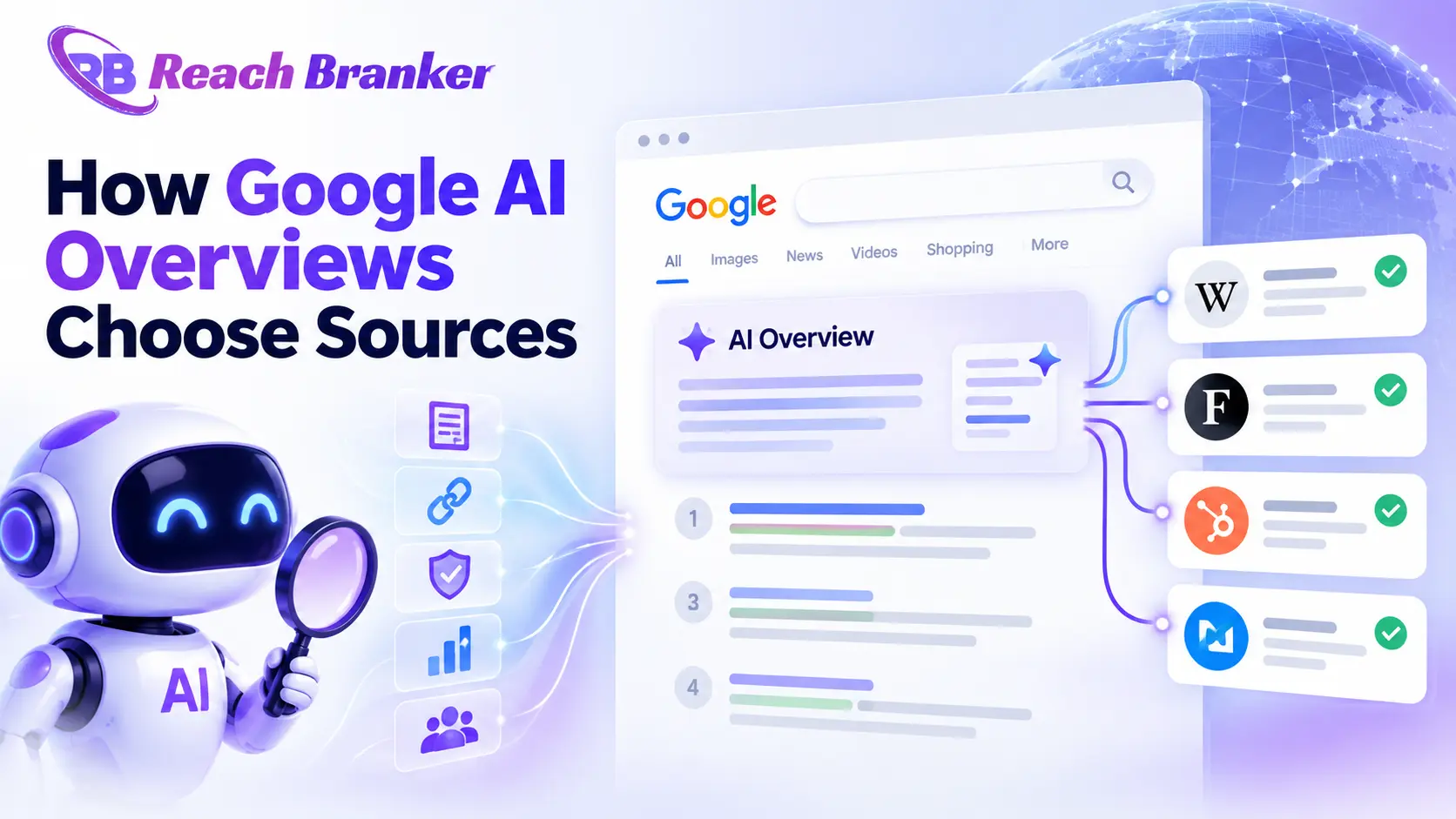
Google AI Overviews select sources through a two-stage process. First, a retrieval layer narrows the open web down to a few hundred candidate pages for a given query, using classic relevance and ranking signals. Second, a synthesis layer scores those candidates on how cleanly their content can be extracted, attributed to a clear entity, and trusted as an accurate quote, then selects the small handful of pages that make it into the visible citation panel. Ranking in the traditional top ten is not required. Roughly 47% of AI Overview citations come from pages that don’t rank in the top 5 organic results, because citation selection rewards answer clarity, passage position, entity precision, and structured content over pure ranking strength. As of May 2026, Google’s Preferred Sources and Highly Cited labels add a further, more direct layer of visibility on top of this selection process.
Key Takeaways
- Ranking and citation are two different games now. A page can sit at position eight in traditional results and still be cited in the AI Overview, while a page ranking first can be skipped entirely if its content doesn’t extract cleanly.
- Passage position matters more than most SEOs realize. In a CXL analysis of 100 AI Overview citations, 55% of cited passages appeared within the first 30% of the source page; a separate study of over 18,000 ChatGPT citations found a nearly identical 44.2% concentration near the top of the document.
- Roughly 83% of searches that trigger an AI Overview now end without a single click to an external website, making the citation itself, not just the resulting click, a meaningful visibility and trust outcome on its own.
- Content combining text with original images, video, or tables is 156% more likely to be selected as an AI Overview source than text-only content.
- Google launched Preferred Sources into AI Overviews and AI Mode on May 27, 2026, letting users personally nominate publishers for more frequent, visibly badged citation, alongside a new “Highly Cited” label for articles that other reporting consistently references back to.
- Entity prominence now matters more for citation than for ranking. Google’s systems favor pages it can attribute cleanly to a named, recognizable source over pages that read as anonymous or unbranded.
- Query fan-out expands a single search into related sub-questions, meaning your page can be cited for a query adjacent to the one you optimized for, not only the exact phrase you targeted.
Why Citation Now Matters as Much as Ranking
For most of SEO’s history, the objective was straightforward: rank in the top few organic positions and the clicks would follow. That relationship has weakened. AI Overviews now appear above traditional results for a large and growing share of searches, and a significant portion of those searches end without any click at all, with independent data putting the zero-click rate for AI Overview searches at roughly 83%. That number sounds discouraging until you separate two different outcomes that used to be inseparable: being clicked, and being cited.
Citation inside an AI Overview is a visibility and trust event in its own right. Your brand name and domain appear directly inside the answer a user sees, in front of anyone comparing options or building initial trust, even when no click follows. And because 47% of AI Overview citations come from pages that don’t rank in the traditional top 5, citation has effectively become a second, parallel competition, one with different rules than classic ranking. Understanding those rules, rather than assuming “rank higher and citations will follow,” is now a distinct and necessary skill.
Read More: Guest Posting Checklist: 15 Things to Verify Before You Pay for a Placement (2026)
The Two-Stage Selection Process
Google’s AI Overview system does not cite sources at random, and it does not simply promote whatever already ranks first. The selection mechanism works in two distinct stages.
Stage one: retrieval. When a query triggers an AI Overview, Google’s systems first narrow the entire open web down to a manageable pool, typically a few hundred candidate pages, using classic relevance and ranking signals similar to traditional search. This stage is closer to familiar SEO: topical relevance, backlink authority, and content quality all still play a role in whether your page even enters the candidate pool.
Stage two: synthesis and scoring. From that narrowed pool, a second layer evaluates each candidate specifically for how well it can be used inside a generated answer. This layer scores pages on extractability (can a clean, self-contained passage be pulled out), attribution (can the content be confidently tied to a specific, credible source), and trust (does the passage state a verifiable, concrete answer rather than a vague or hedged one). A page can pass stage one easily, ranking comfortably in the top three organic results, and still be skipped at stage two because its content doesn’t lift cleanly into a citation. Conversely, a page ranking around position eight can still be selected if it states the answer in two clear sentences with a specific, named data point.
This two-stage structure is also why query fan-out matters. Rather than treating a search as a single, isolated question, Google’s systems often expand it into a cluster of related sub-questions to build a more complete answer, then pull the best-scoring passage for each sub-question, sometimes from different pages entirely. A page thoroughly covering a specific sub-topic, even one you didn’t explicitly target as your primary keyword, can earn a citation through this expansion process.
The Core Signals That Decide Citation
Answer-First Structure
Pages that state a direct, complete answer within the opening portion of the content are dramatically more likely to be cited. This isn’t a stylistic preference, it reflects how the extraction layer works: a synthesis model needs a clean, quotable passage, and burying the answer under several paragraphs of introduction makes that passage harder to isolate cleanly.
Passage Position Within the Page
Independent research reinforces this pattern with hard data. CXL’s analysis of 100 Google AI Overview citations found that 55% of cited passages appeared within the first 30% of the source page, with the top 20% of pages by position accounting for nearly half of all citations studied. A parallel analysis of over 18,000 verified ChatGPT citations found a strikingly similar concentration, with 44.2% of citations coming from the first 30% of a document. The pattern is consistent across AI systems: where an answer physically sits within your content is itself a retrieval consideration, not just a readability nicety.
Entity Clarity and Attribution
Google’s systems increasingly evaluate whether a page can be cleanly attributed to a specific, recognizable entity, meaning a clearly identified author, brand, or organization, rather than reading as an anonymous or interchangeable page. Entity prominence has become more important for citation specifically than it is for traditional ranking; a page can rank well on domain authority alone, but citation increasingly rewards pages the system can name with confidence.
Structured, Machine-Parseable Content
Clean heading hierarchy, well-formed tables, bulleted lists, and properly implemented schema markup all make content easier for the synthesis layer to parse and extract accurately. Google has been explicit that there is no special “AI Overview schema” or magic tag that guarantees inclusion, but standard structured data, concise summaries, and scannable formatting measurably improve how easily a model can lift a clean passage from your page.
Original Data, Images, Video, and Tables
Content combining text with original images, video, or tables is 156% more likely to be selected as an AI Overview source compared with text-only pages. This aligns with a broader theme in 2026 citation behavior: content that demonstrates genuine, original work, proprietary data, first-party research, unique visuals, is treated as more trustworthy and more citation-worthy than content that only restates what other pages have already said.
Freshness and Topical Depth
Regularly updated content signals current expertise and improves inclusion chances, particularly for queries tied to evolving topics. Pages that also address closely related sub-questions, rather than narrowly answering only the primary query, are better positioned to be pulled into query fan-out expansions.
Authority and Backlink Profile
Despite the shift toward extraction-focused signals, domain and page authority have not become irrelevant. Selected pages still typically come from domains with credible backlink profiles that function as a baseline trust signal during the retrieval stage, even if authority alone no longer guarantees selection at the synthesis stage.
Preferred Sources and Highly Cited: What Changed in May 2026
On May 27, 2026, Google extended its Preferred Sources feature into AI Overviews and AI Mode, a meaningful expansion that most guides to AI search citation still haven’t caught up with. Preferred Sources first appeared as a Search Labs experiment in mid-2025 and rolled out globally to Top Stories placements by April 2026, but until the May 2026 update, its effect was limited to that news-focused surface.
Here’s what changed, and what it means practically:
- Users can now personally nominate publishers. Through a dedicated settings page, any searcher can select specific websites as sources they want surfaced more frequently across AI Overviews and AI Mode, not just traditional Top Stories. Google confirmed that more than 345,000 unique sources had already been selected by users since the feature’s broader rollout, across multiple languages and regions.
- A visible “Preferred” badge now appears inside AI answers. When a page from a user-nominated source is cited within an AI Overview, the citation carries a distinct badge, helping that source stand out from the other citations in the same answer panel.
- A separate “Highly Cited” label flags original reporting. This label identifies articles that other pages and reporting consistently reference back to, functioning as a way for Google to surface the primary source of an idea rather than the many secondary pages that simply restate it. For content-driven businesses, this is a direct incentive to publish genuinely original analysis, data, or reporting rather than summarizing existing coverage, since only original sources are positioned to earn this label.
- A developing-topic carousel and perspectives carousel launched alongside it. The developing-topic carousel surfaces preferred sources prominently for breaking or evolving queries, while the perspectives carousel pulls firsthand views from forums and discussion platforms, a separate but related shift that reinforces how much weight Google is now placing on identifiable, original voices within AI search surfaces.
- Practical implication: unlike most SEO levers, which you optimize toward hoping an algorithm rewards the signal, Preferred Sources is closer to an earned relationship. You cannot directly request preferred status. What you can do is make your brand recognizable and trustworthy enough, through consistent original publishing in a clear niche, that readers choose to nominate you themselves, and that Google’s systems recognize your content as the origin point worth flagging as Highly Cited.
Ranking vs. Citation: A Side-by-Side Comparison
| Factor | Traditional Organic Ranking | AI Overview Citation |
|---|---|---|
| Primary mechanism | Single relevance and authority scoring pass | Two-stage: retrieval pool, then extraction/trust scoring |
| Top-10 requirement | Effectively required for visibility | Not required, 47% of citations come from outside the top 5 |
| Passage location | Not directly evaluated | Strongly weighted, over half of citations pull from the first 30% of the page |
| Content format | Helpful but not decisive | Text with original images, video, or tables is 156% more likely to be cited |
| Entity attribution | Secondary factor | Primary factor, favors clearly identified, named sources |
| Freshness | Ranking factor among many | Directly tied to inclusion in developing-topic and evolving queries |
| User influence | None (fully algorithmic) | Direct, via Preferred Sources nomination |
| Visible trust marker | None built-in | Preferred badge and Highly Cited label (since May 2026) |
Step-by-Step Checklist to Earn AI Overview Citations
- Open with a direct answer. State the complete, specific answer to the target query within the first 100 words, before any extended context or background.
- Move your best data point higher on the page. If your strongest, most quotable statistic or conclusion currently sits deep in the article, restructure so it appears within the first 30% of the content.
- Name a clear author and organization. Attach a real byline, author bio, and organizational identity to the content rather than publishing anonymously or under a generic “Admin” account.
- Add at least one original visual, table, or dataset. A proprietary chart, comparison table, or first-party statistic meaningfully increases extraction likelihood compared with text-only explanation.
- Implement clean, relevant schema markup. Article, FAQ, and HowTo schema (where genuinely applicable) help the parsing layer confirm structure, even though no schema type guarantees citation on its own.
- Structure with clear, question-style H2/H3 headings. Match headings to how people actually phrase related questions, supporting query fan-out coverage of adjacent sub-topics.
- Keep the content current. Revisit and update statistics, dates, and examples on a regular cycle, particularly for topics tied to ongoing industry change.
- Publish genuinely original analysis, not summary. Content that only restates existing coverage is structurally disadvantaged against the Highly Cited label, which specifically rewards original source material.
- Build a real backlink and mention profile. Authority signals still matter at the retrieval stage, before synthesis scoring ever gets a chance to evaluate your content.
- Track citation, not just ranking. Monitor brand mentions and citations inside AI Overviews and AI Mode directly, since strong traditional rankings no longer guarantee citation, and citation can occur without a top ranking.
Common Mistakes That Keep Pages Out of AI Overviews
- Burying the answer under a long introduction. A well-researched article that doesn’t state its conclusion until several paragraphs in is structurally harder to extract, regardless of how good the underlying content is.
- Publishing without a clear author or brand identity. Anonymous or generic-byline content is disadvantaged in an environment where entity attribution is now a primary citation factor.
- Treating traditional ranking as the only goal. Teams that optimize purely for top-10 ranking, while ignoring passage structure and extractability, are leaving a large share of achievable citations on the table.
- Skipping original data or visuals entirely. Text-only content competes at a structural disadvantage against pages combining text with original tables, charts, or images.
- Letting high-value content go stale. Outdated statistics or examples reduce both ranking and citation odds, particularly for topics tied to fast-moving developments like AI search itself.
- Assuming schema markup alone guarantees inclusion. Structured data helps parsing, but Google has explicitly confirmed there is no dedicated “AI Overview schema” that forces citation on its own.
- Ignoring adjacent sub-questions. Narrowly answering only the primary target query misses citation opportunities created by query fan-out into related questions.
How to Measure Whether It’s Working
Traditional rank tracking alone can no longer tell the full story of your visibility. Add these to your regular reporting:
- AI Overview citation tracking: Several rank-tracking platforms now report whether and how often your pages appear as cited sources inside AI Overviews for tracked queries, separate from traditional position data.
- Brand mention monitoring across AI platforms: Periodically query ChatGPT, Gemini, and Perplexity directly for questions in your niche, and record whether and how your brand is referenced.
- Referral traffic segmentation: Even with a high zero-click rate, some AI Overview citations do generate click-throughs; segment this traffic separately in analytics rather than folding it into general organic traffic.
- Highly Cited and Preferred badge appearances: Where visible, track which of your pages are earning these labels over time as a direct signal of original-source recognition.
Conclusion
The shift from ranking to citation is not a temporary quirk of AI Overviews, it reflects a genuinely different retrieval and trust model that is likely to keep expanding across AI Mode, AI Overviews, and third-party answer engines alike. The practical takeaway is not to abandon traditional SEO fundamentals; authority, relevance, and backlinks still determine whether your page even enters the retrieval pool in the first place. The real shift is in what happens after that: pages now need to be structurally ready to be extracted, cleanly attributed to a real identity, and backed by original substance rather than restated summary.
Teams that treat citation as a distinct, measurable objective, restructuring for answer-first clarity, strengthening entity identity, publishing genuinely original data, and tracking citation performance directly, will consistently outperform teams still optimizing purely for the traditional top-ten. With Preferred Sources and Highly Cited now live across AI Overviews and AI Mode as of May 2026, the businesses that build recognizable, original, well-attributed content today are positioning themselves for a form of visibility that traditional ranking alone can no longer deliver.
Frequently Asked Questions
Do I need to rank in the top 10 to be cited in an AI Overview? +
No. AI Overview citations can come from pages outside the top organic positions. Citation depends heavily on whether content is relevant, extractable, attributable, and trustworthy.
What is the difference between Preferred Sources and the Highly Cited label? +
Preferred Sources lets users choose publishers they want to see more often. The Highly Cited label highlights original reporting or content that other sources frequently reference.
Does schema markup guarantee my content gets cited in AI Overviews? +
No. There is no special AI Overview schema that guarantees inclusion. Structured data can help search engines understand content, but citation also depends on relevance, quality, trust, and extractability.
Why do 83% of AI Overview searches end without a click? +
AI Overviews can answer a query directly on the search results page, reducing the need to visit another website. This makes source citations valuable for visibility even without a click.
How does query fan-out affect which pages get cited? +
Query fan-out expands a search into related sub-questions. Your page may therefore be cited for a relevant sub-topic even when it does not directly target the user’s original query.
Should I restructure old content to move key answers higher on the page? +
Yes, when it improves the content naturally. Moving clear answers, definitions, and important data higher on the page can make them easier for search and AI systems to extract.