
Quick Answer
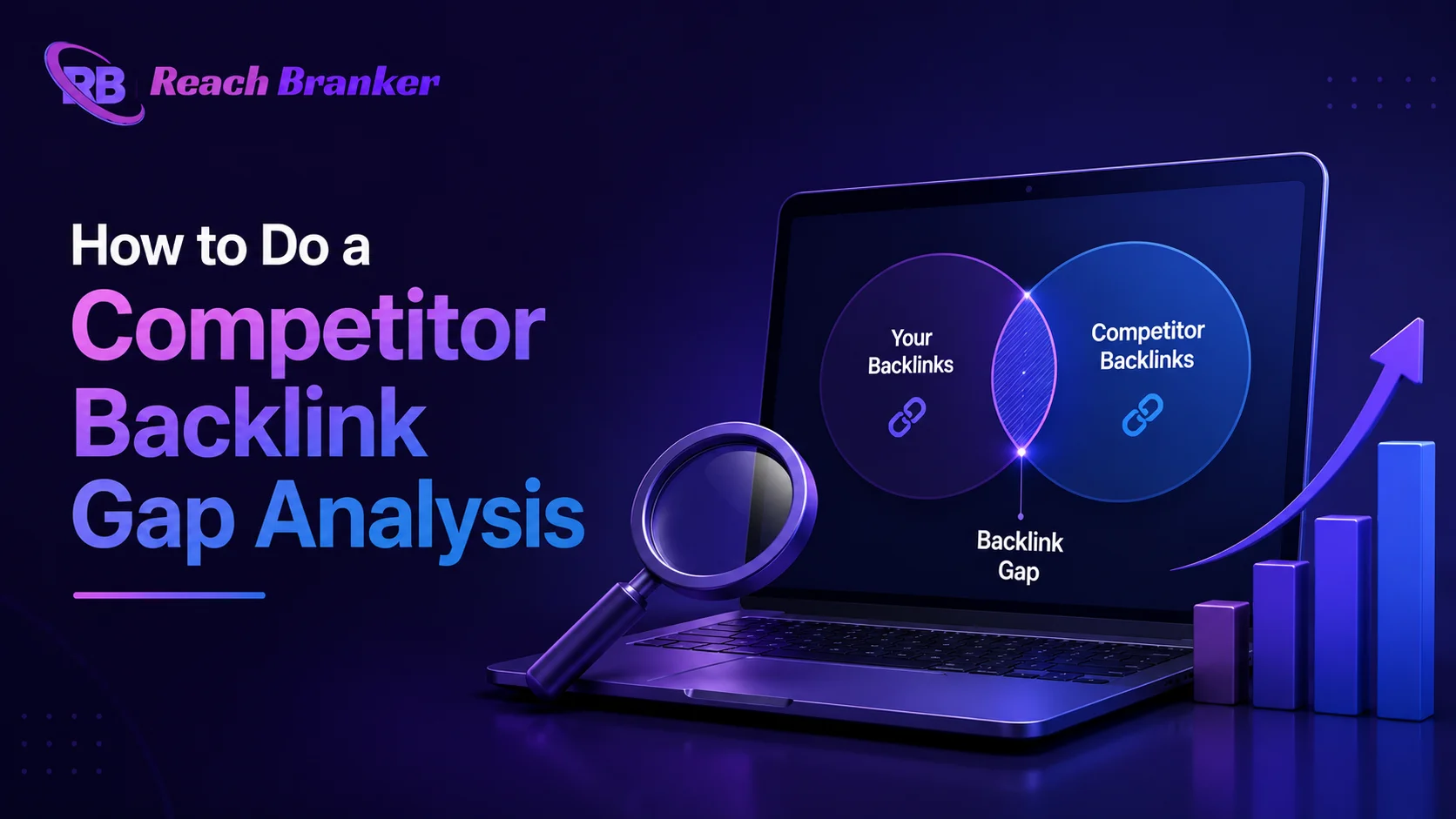
A competitor backlink gap analysis identifies which websites link to one or more of your competitors but do not currently link to you, revealing specific, realistic outreach targets rather than a generic list of high authority sites. The process involves selecting the right competitors to compare against, pulling each competitor’s referring domains through an SEO tool, filtering out irrelevant or low quality results, and prioritizing the remaining list by genuine relevance and outreach feasibility rather than by authority score alone. Done properly, this analysis turns competitor research into a concrete, prioritized action list instead of a vague sense that competitors have more links than you do.
Key Takeaways
A backlink gap analysis is only as useful as the competitor selection behind it, comparing against the wrong competitors produces a misleading, low value target list. Raw gap analysis output requires manual filtering, since automated tools flag domain overlap without judging genuine relevance or realistic outreach feasibility. Domains linking to multiple competitors simultaneously are generally the strongest priority targets, since they demonstrate a pattern of accepting relevant industry links rather than a single, isolated placement. This analysis works best as a recurring process, not a one time exercise, since competitor backlink profiles continue to change over time. The output of a gap analysis should feed directly into an outreach plan, not sit as a static report that never translates into actual link building activity.
What a Backlink Gap Analysis Actually Reveals
A backlink gap analysis compares your site’s referring domains against one or more competitors, surfacing the specific websites that link to them but not to you. This is fundamentally different from a general backlink audit of your own site, which only tells you what you already have. A gap analysis tells you specifically what you are missing, and against which competitor, which is considerably more actionable for planning new outreach.
The value here is not simply learning that competitors have more backlinks overall, a fact most businesses already suspect without needing a formal analysis. The value is the specific list of domains, ones you can realistically evaluate and pitch, since these sites have already demonstrated a willingness to link to at least one business in your exact space.
This distinction, between a vague competitive impression and a concrete, named list of realistic targets, is what separates genuinely useful backlink research from research that produces interesting but ultimately unactionable observations about how far ahead a competitor’s link profile happens to be.
Choosing the Right Competitors to Compare
The single most important decision in this entire process happens before any tool is opened, choosing which competitors to actually compare against. Comparing against a business with a completely different scale, a national brand against a local service business, or a much older, more established site against a newer one, tends to produce a gap list dominated by unrealistic, extremely high authority targets that offer little practical guidance.
A more useful comparison set includes competitors genuinely similar in scale, market position, and target audience, alongside one or two aspirational competitors slightly ahead of your current position. This mix reveals both realistic near term targets and a reasonable sense of where genuine growth in authority could eventually lead.
Pulling the Data, Step by Step
Most standard SEO tools, including widely used platforms for backlink analysis, offer a dedicated gap analysis or link intersection feature, though the underlying process works even without this specific feature using individual backlink reports.
Start by pulling the full referring domain list for your own site and for each selected competitor. Export these lists in a consistent format, typically a spreadsheet, so they can be compared directly. If your tool offers a dedicated gap or intersection feature, input your domain alongside your competitor domains directly, and the tool will generate the overlap list automatically. Without this feature, a straightforward spreadsheet comparison, checking which competitor referring domains do not appear in your own referring domain list, produces the same underlying result with more manual effort.
Filtering Out the Noise
Raw gap analysis output almost always includes a meaningful share of domains not actually worth pursuing, and filtering this list properly is where much of the genuine value of the analysis gets created.
Remove domains with clearly minimal or no genuine organic traffic, regardless of how the site’s authority metric appears, since a domain authority score alone does not confirm a site has real readers. Remove domains that are obviously irrelevant to your specific niche despite linking to a competitor, sometimes a competitor earns an occasional link from an unrelated context that would not make sense for your business to pursue. Remove domains showing signs of being part of a link network or exchange, since these targets carry more risk than genuine value regardless of how many competitors they happen to link to.
Prioritizing Your Target List
Once filtered, the remaining list should be prioritized rather than treated as a single undifferentiated batch. Domains showing strong topical relevance to your specific niche deserve priority over marginally relevant domains, even where the marginal domain shows a slightly higher authority score. Domains with genuine, verifiable organic traffic deserve priority over domains with an impressive metric but limited evidence of real visitors.
Domains that link to more than one of your compared competitors deserve particular priority, a pattern covered in more detail in the next section, since this repetition signals a genuinely accessible, relevant target rather than a single, potentially unusual placement.
Reading Multi Competitor Overlap Correctly
When comparing against multiple competitors simultaneously, pay particular attention to domains appearing in the gap list against more than one competitor at once. A domain linking to three of your four compared competitors, but not to you, represents a considerably stronger signal than a domain linking to only one competitor.
This pattern suggests the domain has an established, ongoing practice of linking to relevant businesses in your specific space, rather than a single, potentially unusual or hard to repeat placement. These multi overlap domains should generally sit at the very top of your prioritized outreach list, since they combine demonstrated relevance with a track record of accepting comparable placements.
Turning the Gap List Into an Outreach Plan
A gap analysis that ends as a static spreadsheet provides limited practical value. The genuine purpose of this exercise is generating a concrete, prioritized outreach plan, meaning the final list should feed directly into your next round of guest posting pitches, digital PR outreach, or resource link building efforts.
For each priority target, note what type of placement seems most realistic based on the site’s existing content and structure, a guest post, a niche edit within existing relevant content, or a digital PR angle if the site regularly covers industry news. This additional layer of planning turns a generic list of domains into a genuinely actionable pipeline your outreach team can work through systematically.
The ReachBranker Gap Analysis Framework
We apply a structured four stage process for every client gap analysis.
- Stage one, competitor selection, choosing a genuinely comparable set alongside one or two aspirational targets, avoiding both unrealistic and unhelpfully modest comparisons.
- Stage two, data extraction, pulling complete, current referring domain data for the client and every selected competitor.
- Stage three, filtering and relevance scoring, removing low value domains and scoring the remainder specifically on topical relevance and verified traffic, not authority metrics alone.
- Stage four, outreach translation, converting the final prioritized list into a specific, actionable outreach plan with a realistic placement type identified for each target.
A Practical Example: Reading a Real Gap Analysis Result
Consider a mid sized accounting software company running a gap analysis against three direct competitors. The raw output returns two hundred and ten domains linking to at least one competitor but not to this business. After filtering out low traffic sites, unrelated domains, and a handful of obvious link network participants, the list drops to sixty five genuinely relevant, reasonably authoritative targets.
Sorting this filtered list by multi competitor overlap reveals twelve domains linking to all three competitors simultaneously, a small business finance blog, several accounting trade publications, and a handful of small business resource sites among them. These twelve become the immediate priority for outreach, since their consistent pattern of linking to comparable businesses in this exact space makes them considerably more likely to accept a similar placement than a domain linking to only one competitor on a single occasion. The remaining fifty three domains, showing single competitor overlap, get organized into a secondary outreach wave, still worth pursuing but reasonably assigned lower initial priority than the twelve domains demonstrating repeated, consistent relevance.
This is the practical difference between raw tool output and a genuinely prioritized, actionable target list, the same two hundred and ten domain starting point produces a completely different, far more useful outcome once properly filtered and sorted.
Common Mistakes When Running This Analysis
Comparing against competitors of a dramatically different scale, producing a gap list dominated by unrealistic targets that offer little practical near term value.
- Treating raw, unfiltered tool output as a ready made target list, skipping the manual relevance and quality review that actually makes this analysis genuinely useful.
- Prioritizing purely by authority metric, missing genuinely valuable, more accessible targets with strong relevance but a more modest authority score.
- Running this analysis once and never repeating it, missing how competitor backlink profiles continue to evolve and generate new gap opportunities over time.
- Generating a gap list and never converting it into an actual outreach plan, leaving genuine research effort with no practical follow through.
Expert Tips for Getting More From This Process
Run a fresh gap analysis on a regular schedule, quarterly for most businesses, rather than treating a single analysis as permanently complete. Weight multi competitor overlap domains heavily in your prioritization, since these consistently represent the most accessible, relevant targets available. Cross reference gap analysis targets against your existing publisher relationships, since a domain already showing linking activity toward your specific niche may also already have some familiarity with your brand through prior outreach.
Combine gap analysis with a broader content gap review, since a domain linking to a competitor’s specific article may be receptive to a comparable or improved piece from your own site as well. Track which gap analysis targets actually convert into successful placements over time, using this data to refine how you prioritize future analyses.
Read More: How to Audit and Disavow Toxic Backlinks Safely
A Note on Combining This With Content Gap Analysis
A backlink gap analysis works particularly well alongside a parallel review of what content each competitor has published that earned the links you are now trying to reclaim through outreach. If a specific competitor article earned links from several domains now appearing in your gap list, reviewing that specific article, what it covers, how thoroughly, what original data or angle it includes, often reveals exactly what those domains found worth linking to in the first place.
Building a comparable or genuinely improved version of that same content gives your outreach team a stronger, more specific pitch than a generic request for a link, since you can point to a concrete, superior resource rather than asking a site owner to link to your site purely on the basis of general relevance.
A Final Word on Treating This as Ongoing Intelligence, Not a One Time Project
The businesses getting the most consistent value from gap analysis are treating it as a standing piece of competitive intelligence gathering, reviewed on a fixed schedule, rather than a one time research exercise completed and then set aside. Competitor backlink profiles shift constantly as they run their own outreach and PR campaigns, meaning a gap list from six months ago has almost certainly missed newer opportunities that have since emerged.
Building this analysis into a recurring quarterly rhythm, alongside your broader link building reporting, keeps your outreach pipeline consistently supplied with fresh, realistic targets rather than periodically running dry between infrequent, irregular research efforts.
Conclusion
A competitor backlink gap analysis is one of the more genuinely practical exercises available in link building, precisely because it produces a specific, realistic list of targets rather than a vague sense that competitors are simply ahead. The value depends heavily on doing the work properly, choosing genuinely comparable competitors, filtering raw output for real relevance and quality, and prioritizing by genuine opportunity rather than authority score alone.
Treated as a recurring process feeding directly into an active outreach plan, rather than a one time report, this analysis becomes a genuinely reliable engine for identifying new, realistic link building opportunities on an ongoing basis.
Talk to Our Team About a Full Competitor Backlink Gap Analysis. Explore Our Link Building Services.
Frequently Asked Questions
How many competitors should I include in a single gap analysis? +
Three to five competitors generally provide a useful balance, revealing meaningful backlink overlap without making the resulting opportunity list difficult to review and prioritize.
Do I need a paid SEO tool to run a backlink gap analysis? +
Most dedicated gap analysis features require a paid SEO tool, but manual comparisons using backlink exports can achieve similar results with more effort.
How often should a backlink gap analysis be repeated? +
Quarterly is a reasonable cadence for most businesses because competitor backlink profiles continually change and create new opportunities.
Should I disregard every low authority domain in the gap list? +
No. A domain with modest authority can still be valuable when it has strong topical relevance, genuine traffic, and a quality audience. Authority should not be the only filtering criterion.
Can this analysis reveal negative SEO or spam patterns among competitors? +
Occasionally. A gap list containing many domains with clear link scheme signals may indicate questionable tactics, but the evidence should be interpreted cautiously.
What should I do if my gap analysis returns very few genuine opportunities? +
Consider expanding the competitor set slightly or combining gap analysis with digital PR, resource link building, and other outreach strategies.
Is a backlink gap analysis useful for a brand new website with very few existing backlinks? +
Yes. A gap analysis can give a new website a prioritized list of relevant backlink opportunities instead of approaching outreach without a structured target list.
How is a gap analysis different from a general competitor backlink audit? +
A competitor backlink audit reviews another site’s backlink profile, while a gap analysis compares competitor profiles with your own to identify domains you are missing.