Quick Answer
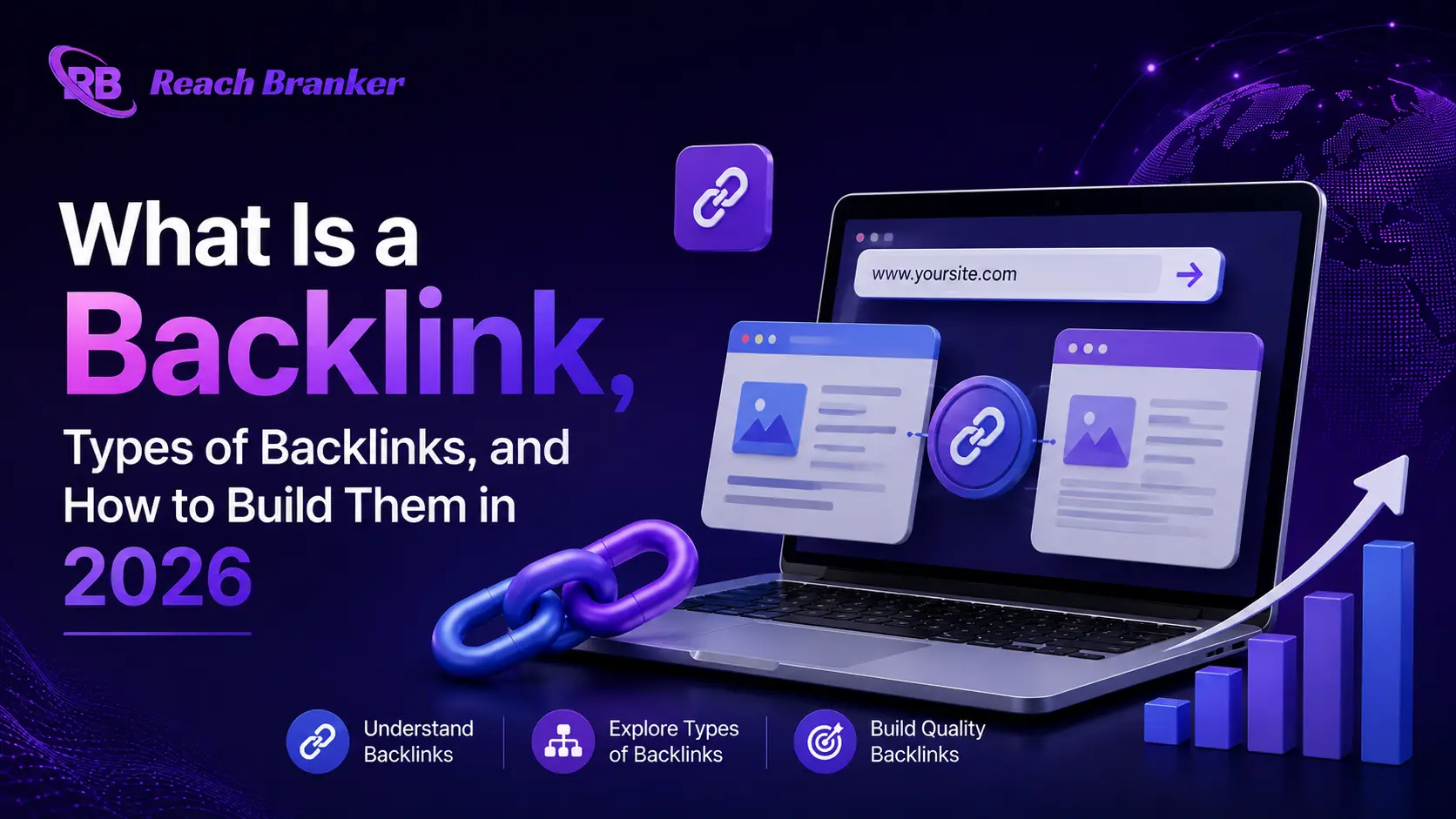
A backlink is a hyperlink on one website that points to a page on a different website, functioning as a signal to search engines that the linked page is relevant, trustworthy, or worth referencing. Backlinks come in many forms, editorial links earned through genuine content, guest post links secured through outreach, directory listings, digital PR coverage, and dozens of other variations, each carrying different levels of SEO value depending on relevance, placement, and how the link was actually earned.
There are dozens of legitimate ways to build backlinks, ranging from guest posting and digital PR to resource link building, broken link reclamation, and creating genuinely original content other sites want to reference. This guide covers every major type of backlink and every realistic, current method for earning them.
Key Takeaways
A backlink is fundamentally a vote of confidence from one website to another, and search engines weigh both the quantity and, more importantly, the quality and relevance of these votes. Backlinks fall into three official categories according to Google, natural links, manual links secured through outreach, and self created links, each treated differently by search engine guidelines. Beyond these three categories, backlinks take many practical forms, editorial, guest post, directory, forum, resource page, digital PR, and more, each with different typical value and risk levels.
There are more legitimate ways to build backlinks in 2026 than most businesses realize, and the strongest link building programs combine several methods rather than relying on just one. Not all backlinks are worth pursuing equally, relevance, genuine site traffic, and editorial legitimacy matter considerably more than a single authority metric in isolation.
What Is a Backlink, A Complete Definition
A backlink, sometimes called an inbound link or an incoming link, is a hyperlink on one website that points to a page on a different website. If a technology publication writes an article and includes a link to your company’s website within that article, your website has earned a backlink. The publication is the linking site, and your website is the linked, or target, site.
The term itself comes from the perspective of the site receiving the link, from your website’s point of view, the link is coming back to you, hence backlink. This is distinct from an outbound link, which is a link your own site sends out to another website, and from an internal link, which connects two pages within the same website.
Backlinks matter because search engines, most notably Google, use them as one of many signals to evaluate how trustworthy, authoritative, and relevant a given page or website actually is. The underlying logic is intuitive even before any technical explanation, if many credible, relevant websites choose to link to your content, that pattern suggests your content is genuinely valuable, in roughly the same way that being cited frequently by respected sources suggests a piece of academic research is credible.
Why Backlinks Matter for SEO
Search engines face a genuinely difficult problem, billions of web pages exist, and a search engine needs some reliable way to judge which pages deserve to rank highly for a given query. Backlinks have remained one of the most consistently important signals used to solve this problem since the earliest days of modern search, originating from Google’s foundational PageRank algorithm, which evaluated pages partly based on the quantity and quality of other pages linking to them.
While search algorithms have grown vastly more sophisticated since PageRank’s original introduction, the core principle behind why backlinks matter has remained remarkably stable. A page earning genuine, relevant links from other credible sources continues to send a strong trust and relevance signal that search engines weigh heavily, alongside many other factors including content quality, technical performance, and user experience.
Beyond direct ranking impact, backlinks also drive real, practical value independent of SEO. A link placed on a site with genuine traffic can send direct referral visitors to your site. A link from a respected, recognized publication carries genuine brand credibility simply by association. And increasingly, backlinks and the brand mentions that often accompany them contribute to how AI search systems build a picture of which brands are genuinely trustworthy and worth referencing in generated answers, extending the value of backlinks beyond traditional search rankings alone.
How Search Engines Evaluate a Backlink
Not every backlink carries equal weight, and understanding what actually influences a link’s value helps explain why some backlinks meaningfully move rankings while others contribute almost nothing.
- Relevance matters enormously. A link from a website genuinely focused on your industry or topic area carries considerably more weight than a link from a completely unrelated site, even if the unrelated site has a higher overall authority score. Search engines have grown increasingly sophisticated at understanding topical relationships between sites, meaning genuine relevance is difficult to fake through metrics alone.
- Authority and trust of the linking site matters as well, though this should never be evaluated through a single metric in isolation. A site with genuine organic traffic, real editorial standards, and an established reputation within its space passes considerably more value than a site with an inflated authority score but no genuine audience behind it.
- Placement and context within the page matter too. A link placed naturally within the body of genuinely relevant content, surrounded by text that provides context for why the link exists, generally carries more value than a link buried in a footer, a sidebar, or an unrelated section of a page.
- The anchor text used, the clickable words containing the link, provides an additional relevance signal, discussed in more detail later in this guide, though anchor text should always look natural and varied rather than repetitive or obviously manipulated.
Tools Commonly Used to Track and Analyze Backlinks
Understanding backlink value in practice generally requires at least basic familiarity with the tools used to measure it. Dedicated SEO platforms, several widely used across the industry, crawl the web continuously and maintain large databases of discovered links, allowing you to check your own backlink profile, research a competitor’s links, and evaluate a prospective link opportunity before pursuing it.
- Google Search Console, free for any verified website owner, provides a links report showing which sites Google itself has recorded linking to your site, offering a useful, authoritative cross reference alongside third party tools, which sometimes capture a broader but less precisely Google aligned data set.
- Beyond dedicated backlink tools, browser extensions can quickly check the metrics of any individual site while browsing, useful for a fast initial assessment before deciding whether a prospective link opportunity warrants a fuller review.
- Whichever combination of tools you use, remember that any single metric, whether Domain Authority, Domain Rating, or a similar score, remains an estimate produced by that specific tool’s own methodology, not a figure Google itself publishes or directly uses, which is exactly why relying on any one score in isolation, without genuine relevance and traffic verification alongside it, tends to produce a misleading picture of true link value.
Google’s Three Official Backlink Categories
Google’s own webmaster guidelines describe three formal categories of links, and understanding this official framework provides useful context for everything else covered in this guide.
- Natural links occur without any specific action from the site owner. A blogger genuinely enjoys your product and writes about it unprompted, including a link, entirely independent of any outreach or request on your part.
- Manual link building involves actively working to earn links through legitimate methods, guest posting, digital PR, resource link building, and similar tactics covered extensively later in this guide. These links are earned through genuine effort and relationship building, and Google’s guidelines explicitly support this category of activity when done through legitimate, non manipulative means.
- Self created links are links you add yourself, typically through directory submissions, forum profiles, blog comments, or similar mechanisms where you directly control the link’s creation. These links generally carry minimal direct ranking value and, according to Google’s guidelines, should generally use a nofollow or similar attribute when created at scale, since search engines specifically watch for patterns suggesting large scale self created link schemes.
- Understanding this three part distinction matters because it clarifies which link building activities Google explicitly supports, manual, relationship based outreach, versus which activities carry more inherent risk if pursued aggressively or at unnatural scale, purely self created links with no genuine editorial involvement from the linking site.
The Complete List of Backlink Types
Beyond Google’s three official categories, backlinks take many distinct practical forms in day to day SEO work. Understanding each type helps you recognize genuine opportunities and evaluate which types are worth prioritizing for your specific situation.
- Editorial backlinks are links included naturally within content because an editor or writer genuinely judged your site, product, or content worth referencing. These typically carry the strongest value, since they reflect genuine, unprompted editorial judgment rather than a transaction or a self created placement.
- Guest post backlinks come from articles you write and publish on someone else’s website, typically including a contextual link back to your own site as part of the arrangement, usually alongside an author bio. These are covered extensively across this site’s guest posting content and remain one of the most reliable, controllable link building methods available.
- Niche edit backlinks, sometimes called curated links, involve inserting your link into an already published, already existing piece of content on another site, rather than creating an entirely new article. These benefit from the host page’s existing ranking history and traffic.
- Resource page backlinks come from pages a site maintains specifically to list useful tools, guides, or references within a given topic area. Earning a placement on a genuinely relevant resource page provides a durable, long term link, since these pages tend to remain live and maintained over time.
- Digital PR backlinks result from media coverage, typically earned by pitching journalists a genuinely newsworthy story, an original data study, expert commentary, or a compelling angle tied to current events. These links often come from high authority news and industry publications difficult to access through other methods.
- Broken link backlinks are earned by identifying dead links on relevant pages and pitching your own content as a working replacement, discussed in full detail in this site’s dedicated broken link building guide.
- Directory and citation backlinks come from business directories, industry association listings, and similar structured databases. Local business directories in particular remain genuinely valuable for local SEO purposes, even though many directory links carry minimal direct authority value individually.
- Forum and community backlinks come from genuine participation in relevant online communities, forums, and discussion boards, where a link is shared as part of a genuinely helpful contribution rather than as spam.
- Social media backlinks come from links shared across social platforms. Most major platforms apply nofollow attributes by default to these links, meaning they typically do not pass direct ranking credit, though they still contribute genuine referral traffic and brand visibility.
- Comment backlinks come from links included within blog comment sections. These carry minimal SEO value in almost every legitimate case today, since widespread comment spam led most sites to apply nofollow attributes to comment links by default years ago.
- Profile backlinks come from links included within an online profile, a professional network, a community platform, or a similar site allowing users to create a public profile with a link to their own website.
- Web 2.0 backlinks come from creating a mini site or blog on a free, high authority platform, such as a hosted blogging service, and linking back to your main website from within that content. These carry genuine value only when the Web 2.0 property itself contains real, original content rather than existing purely as an empty shell built solely to host a link.
- PDF and document submission backlinks come from uploading a document, an ebook, a whitepaper, or a slide deck, to a document sharing platform, with a link back to your site included within the document or the platform listing itself. These generally carry modest direct authority value but can drive genuine referral traffic and support broader brand visibility when the underlying document is genuinely useful.
- Social bookmarking backlinks come from submitting your content to bookmarking and content discovery platforms, distinct from standard social media sharing, where users actively curate and vote on content they find valuable. Most of these links carry nofollow status but can meaningfully support content discovery and indirect visibility.
- Press release backlinks come from distributing a press release through a newswire or distribution service, typically including a link back to your site within the release itself. Free and low cost distribution services generally offer limited direct SEO value given the low editorial bar for acceptance, though a genuinely newsworthy release picked up by actual journalists can lead to considerably stronger, editorially earned coverage beyond the initial distribution.
- Question and answer backlinks come from platforms built around users asking and answering questions, where a genuinely helpful, detailed answer sometimes includes a relevant link as a natural part of a thorough response, distinct from general forum participation given the specific question and answer format these platforms use.
- Image and infographic backlinks are earned when another site embeds a visual asset you created, an infographic, a chart, or an original illustration, typically including an attribution link back to the original source as a condition of use.
- Video backlinks come from links included in video descriptions, video platform profiles, or content referencing a video you produced, increasingly relevant given how much research and content discovery now happens through video platforms.
- Podcast backlinks are earned through guest appearances on relevant podcasts, typically including a link back to your site within the episode show notes or description.
- Affiliate backlinks come from affiliate partners linking to your product or service as part of a commission based partnership. These should generally carry a sponsored or nofollow attribute given their commercial nature.
- Reciprocal backlinks involve two sites agreeing to link to each other. Used sparingly and where a genuine, relevant connection exists, these are legitimate, though excessive, purely reciprocal link exchanges at scale can appear manipulative to search engines.
- Unlinked brand mentions are not technically backlinks at all, since no hyperlink exists, but they represent a genuine, adjacent opportunity, discussed in detail in this site’s guide to reclaiming unlinked mentions, since many of these can be converted into genuine backlinks through simple outreach.
Seeing These Types in a Real Backlink Profile
Reviewing an actual, healthy backlink profile usually reveals several of these types layered together rather than a single dominant category. A genuinely well established business site might show a foundation of editorial mentions earned through digital PR coverage, a steady stream of guest post placements built through ongoing outreach, a handful of resource page listings earned by publishing a genuinely useful free tool, several directory and citation listings supporting local visibility, and a scattering of forum, profile, and social links accumulated simply through normal brand activity across the web.
This layered pattern is precisely what search engines expect to see from a genuinely organic, real world business, and it is also why concentrating exclusively on a single backlink type, even a generally strong one like guest posting, tends to produce a less resilient, less convincing profile than one built through genuine variety across several of the categories covered above.
A Brief Note on Dofollow Versus Nofollow
Every backlink, regardless of type, carries either a dofollow or nofollow status, an attribute that tells search engines whether to pass ranking credit, called link equity, from the linking page to the destination page. Dofollow is the default behavior for a standard hyperlink, while nofollow, along with related attributes like sponsored and user generated content, explicitly tells search engines not to pass this credit by default.
This distinction genuinely matters and deserves careful explanation, but a full comparison, including exactly how Google currently treats nofollow links, when nofollow is actually the correct, compliant choice, and why a healthy backlink profile benefits from a natural mix of both types, is covered in complete depth in a dedicated article on this site specifically comparing dofollow and nofollow links.
For the purposes of this pillar guide, the key point to understand is simply that both link types exist, both serve genuine purposes within a natural backlink profile, and neither should be dismissed as entirely without value.
How Anchor Text Affects Backlink Value
Anchor text, the visible, clickable words that make up a hyperlink, provides search engines with additional context about what the linked page is actually about. Anchor text generally falls into several recognizable categories, exact match anchors using your precise target keyword, partial match anchors using a variation or related phrase, branded anchors using your company or product name, generic anchors using phrases like click here or read more, and naked URL anchors simply displaying the raw web address.
A genuinely natural backlink profile shows meaningful variety across these anchor text categories, since real, organic linking behavior rarely produces a uniform pattern of identical, exact match commercial anchors across every single link. An unnaturally heavy concentration of exact match commercial anchor text is one of the more commonly recognized signals of manipulative link building, independent of whether the individual links themselves came from otherwise legitimate sites.
Recognizing a Genuinely Risky or Toxic Backlink
Not every backlink you encounter, whether earned through your own outreach or discovered pointing to your site unexpectedly, is worth keeping or pursuing. Several patterns consistently indicate a genuinely risky or low value link worth avoiding or, in the case of an existing link already pointing to your site, potentially addressing through the disavow process covered in a dedicated guide elsewhere on this site.
A site consisting almost entirely of outbound links with little genuine content of its own, clearly built to host paid or exchanged links rather than serve any real audience, represents one of the clearest warning signs. A sudden, unnatural cluster of links arriving within a short period, particularly from domains sharing obvious technical or ownership connections, suggests a coordinated scheme rather than organic acquisition.
Identical or near identical exact match anchor text repeated across many otherwise unrelated domains rarely reflects genuine, independent editorial decisions happening across different sites.
It is worth being clear that a single low authority link, or a link from a small but genuinely legitimate site, does not automatically qualify as toxic. Context and pattern matter considerably more than any individual metric, and treating every modest or unfamiliar link as inherently dangerous leads to unnecessary caution that can actually work against building a genuinely diverse, natural looking backlink profile.
Every Legitimate Way to Build Backlinks in 2026
With a clear understanding of what backlinks are and the forms they take, the next practical question becomes how to actually earn them. The methods below represent every major, current, legitimate approach available, several of which have dedicated, deeper guides elsewhere on this site for readers wanting to go further into a specific tactic.
- Guest posting remains one of the most reliable, controllable methods available, writing and publishing content on relevant third party websites in exchange for a contextual backlink and author attribution. Its main strength is predictability, since placements can be planned on a schedule rather than depending on unpredictable media interest, and the accompanying content itself often drives genuine referral traffic and brand exposure beyond the link alone. This site’s dedicated guest posting guide and cost breakdown cover this method in full depth.
- Digital PR involves earning media coverage by pitching journalists and publications a genuinely newsworthy angle, original research, survey data, or expert commentary tied to current events within your industry. This method typically produces the highest authority links available but requires either a genuinely compelling story or significant, sustained outreach effort. Because journalists receive dozens of pitches daily, success depends heavily on genuine newsworthiness rather than a well written email alone, meaning the underlying story idea usually matters more than the pitch itself.
- Niche edits, or curated link insertions, involve identifying already published, relevant content and pitching a contextual addition rather than an entirely new article, generally faster and less expensive than full guest posting.
- Broken link building involves finding dead links on relevant pages and pitching your own working content as a replacement, covered in complete step by step detail in this site’s dedicated broken link building guide.
- Resource link building involves creating and promoting genuinely useful content specifically designed to be listed on resource and reference pages within your industry, a checklist, a comprehensive guide, or a free tool, then reaching out to site owners who maintain relevant resource pages.
- Unlinked mention reclamation involves identifying places your brand has already been mentioned without a link and requesting the site owner add one, covered in full in this site’s dedicated mention reclamation guide, and representing one of the lowest effort, highest success rate tactics available.
- Creating original data and research gives other sites a genuine reason to cite your content, since original survey data, original analysis of existing data sets, or original research findings offer something no competing content can simply replicate through better writing alone.
- Building free tools and calculators creates a genuinely useful, shareable asset that naturally attracts links over time, since people bookmark, reference, and link to useful utilities considerably more readily than to standard articles.
- HARO and journalist outreach platforms connect businesses with reporters actively seeking expert sources and quotes for stories in progress, offering a direct route to earning media backlinks without needing to originate the story pitch yourself.
- Scholarship link building involves creating a genuine scholarship program and reaching out to educational institutions, which often maintain resource pages listing available scholarships, though this method should only be pursued with a genuinely funded, real scholarship rather than as a purely manipulative link scheme.
- Testimonials and reviews for tools and services you genuinely use can sometimes earn a backlink, many software companies and service providers maintain a page featuring customer testimonials with a link back to the customer’s own website.
- Interview features and expert roundups involve being featured as a contributor or interview subject on another site, typically including a link back to your site within the published piece.
- Podcast guesting earns a backlink through episode show notes when you appear as a guest on a relevant podcast within your industry, an increasingly valuable channel given how much audience attention podcasts now command.
- Community engagement on platforms like Reddit and Quora, when done as genuine, non promotional participation, can earn both direct links where platform rules allow them and broader brand visibility that supports link building efforts elsewhere, though this requires considerable care given how strongly these communities reject obvious self promotion.
- Competitor backlink gap analysis, covered in full in this site’s dedicated guide, involves identifying which sites link to your competitors but not to you, turning competitive research into a concrete, prioritized outreach target list.
- Business directory and citation submissions, while individually low value, collectively contribute to a healthy, natural backlink profile and remain genuinely important for local SEO specifically.
- Sponsoring relevant events, organizations, or content creators within your industry often earns a backlink as part of the sponsorship acknowledgment, typically marked as sponsored per Google’s guidelines, but still valuable for visibility and brand association.
- Creating shareable visual content, infographics, original illustrations, and data visualizations, gives other sites a genuine, embeddable asset to reference, typically earning an attribution link as a condition of use.
Comparing the Main Methods Side by Side
Method, Typical Authority Level, Typical Speed, Level of Control, Typical Cost
- Guest Posting, Moderate to High, Weeks, High, Moderate
- Digital PR, High, Slower and Variable, Low, Higher
- Niche Edits, Moderate, Fast, Moderate, Lower to Moderate
- Broken Link Building, Moderate, Fast, Moderate, Low, mostly time investment
- Resource Link Building, Moderate, Ongoing, High, Low, mostly time investment
- Unlinked Mention Reclamation, Variable, Very Fast, High, Very Low
- Original Data and Research, High, Slow to build then ongoing, High, Higher upfront
- Free Tools and Calculators, Moderate to High, Slow to build then ongoing, High, Higher upfront
This comparison is necessarily general, since actual results vary by niche, execution quality, and how much genuine effort goes into each method, but it offers a useful starting reference when deciding where to allocate limited time or budget across the many options covered in this guide.
Which Backlink Building Method Should You Use
Deciding Which Pages Deserve Backlink Attention First
Before choosing methods, it helps to decide which specific pages on your site should actually receive the bulk of your link building effort, since not every page benefits equally from additional backlinks. Pages already targeting genuinely valuable, commercially important keywords, but currently ranking just outside the top few positions, often represent the strongest opportunity, since additional authority can realistically push them into significantly more visible positions.
Cornerstone or pillar content, comprehensive resources similar in scope to this guide, generally deserve priority as well, since backlinks earned here can indirectly benefit the entire connected content cluster through internal linking, discussed in more detail later in this guide. Commercial pages directly tied to revenue, service pages and product pages specifically, deserve consideration too, though these are often harder to earn genuine editorial links toward directly, meaning supporting content that links back to these commercial pages sometimes provides a more realistic path than pursuing direct links to a sales focused page itself.
Pages with weak or thin existing content generally should not receive backlink focus until the content itself has been strengthened, since directing links toward a page that does not yet satisfy genuine search intent tends to produce a poor return regardless of how strong the resulting backlinks are individually.
With so many legitimate methods available, prioritizing effort sensibly matters more than attempting every tactic simultaneously. Guest posting and digital PR generally deserve the largest share of ongoing effort for most businesses, given their reliability and the genuine authority they typically deliver. Broken link building, resource link building, and unlinked mention reclamation offer excellent lower cost, lower effort supplementary tactics worth running alongside these primary methods. Original data creation and free tool development represent higher upfront investment but produce genuinely durable, ongoing link attraction once published, continuing to earn backlinks passively long after the initial creation effort.
The specific mix that makes sense depends on your budget, your team’s available time, and how competitive your specific niche is, but most genuinely strong backlink profiles draw on at least four or five of these methods simultaneously, rather than relying on a single tactic exclusively.
How the Right Mix Changes by Business Type
A local service business, a plumber, a dentist, a regional law firm, generally benefits most from local citations, community based links, and regional press coverage, since these directly support the local search visibility that matters most for this kind of business, with broader guest posting and digital PR playing a smaller, supporting role.
A SaaS or software company typically benefits most from technology and industry specific guest posting, original product usage data turned into digital PR angles, and resource or tool creation aimed at the specific software category it competes in, an approach covered in considerably more depth in this site’s dedicated guide to guest posting for SaaS companies.
An ecommerce brand generally benefits from a mix of digital PR tied to product launches or seasonal moments, influencer and content creator partnerships that often function similarly to guest posting relationships, and resource link building around genuinely useful buying guides or comparison content.
A content publisher or media focused site often benefits disproportionately from original research and data journalism, since this content type is specifically what other publishers and journalists look to cite, alongside strong internal linking that helps distribute the authority earned by any single popular piece across the wider site.
An enterprise or large established brand typically has access to the widest range of methods simultaneously, given greater budget and existing brand recognition, and generally benefits from a genuinely blended program spanning most of the methods covered throughout this guide rather than concentrating narrowly on just one or two.
The ReachBranker Backlink Quality Framework
Before pursuing any backlink opportunity, regardless of which method produced it, we evaluate it against four consistent criteria.
- Relevance, does the linking site genuinely overlap with your industry or audience, not just a superficial, tangential connection.
- Authenticity, does the site show genuine organic traffic and real editorial standards, rather than existing purely to sell or exchange links.
- Context, is the link placed naturally within genuinely relevant content, with anchor text that looks organic rather than manipulated.
- Durability, is this link likely to remain live and valuable over time, or is it the kind of placement likely to be removed, altered, or devalued shortly after being secured.
- A backlink opportunity failing multiple criteria within this framework is generally not worth pursuing, regardless of how impressive any single metric associated with it might appear.
A Realistic Timeline for Backlink Building Results
Setting accurate expectations about timing helps avoid two common failure patterns, abandoning a genuinely sound strategy too early, or continuing an ineffective one for too long without recognizing it is not working.
In the first month, expect research, outreach setup, and the first wave of placements to begin going live, generally with minimal ranking movement yet, since search engines need time to discover, crawl, and factor in new links.
Between months two and four, placements should be accumulating steadily, and early ranking movement often becomes visible for less competitive target keywords, while more competitive terms typically continue building toward visible movement.
Between months four and six, a genuinely well executed program should show measurable ranking improvement across most target keywords, alongside visible growth in referring domain count and overall backlink profile diversity.
Beyond six months, the focus generally shifts toward sustaining and compounding existing momentum, since backlink value tends to build cumulatively over time rather than each individual link producing an isolated, one time effect.
This timeline assumes consistent, ongoing effort throughout, a burst of activity followed by months of inactivity produces a considerably less predictable, less reliable pattern of results than steady, sustained work.
Why Internal Linking Amplifies the Value of Every Backlink You Earn
A backlink pointing to any single page on your site does not stay confined to that one page, provided your internal linking structure is set up to distribute its value. When a page earning strong external backlinks links internally to other relevant pages on your own site, some of that authority flows through to those connected pages as well, a genuinely important but frequently overlooked way to maximize the return on every backlink secured.
This means the pages you choose to actively pursue backlinks for should generally be chosen partly based on how well positioned they are within your site’s internal linking structure, not purely on their own individual importance in isolation. A well linked pillar page, similar in structure to this one, that connects out to many related, deeper articles allows link building effort focused on the pillar to indirectly benefit the entire connected content cluster, rather than that value remaining isolated to a single page.
Reviewing your internal linking structure periodically, ensuring your highest priority commercial and informational pages are genuinely well connected to the rest of your site rather than sitting in relative isolation, is a genuinely worthwhile complement to any active backlink building program, since it directly determines how far the value of each individual link building win actually reaches across your site.
Common Mistakes Businesses Make With Backlinks
Chasing a single authority metric, Domain Authority or Domain Rating, while ignoring genuine relevance, real traffic, and editorial legitimacy, the combination of factors that actually determines a backlink’s true value.
Relying on a single link building method exclusively, missing the genuine diversity a natural, resilient backlink profile requires across multiple types and sources.
Pursuing low quality, high volume link building tactics, purchased links from unvetted networks or automated placement schemes, that create genuine risk of algorithmic devaluation or manual penalty.
Ignoring anchor text diversity, repeatedly using the same exact match commercial anchor across many links, a pattern that stands out clearly to search engines as manipulated rather than organic.
Treating backlink building as a one time project rather than an ongoing, sustained program, missing the compounding value that comes from consistent, long term link acquisition.
Expert Tips for Building a Genuinely Strong Backlink Profile
Diversify across at least four or five different backlink types and methods rather than concentrating effort entirely on a single tactic, building the kind of natural variety search engines expect to see. Prioritize relevance and genuine site quality over any single authority metric when evaluating a potential backlink opportunity, regardless of which method is being used to pursue it. Build at least one genuinely original content asset, whether original research, a free tool, or a comprehensive resource, since these continue attracting links passively long after initial publication. Track your backlink profile’s growth by referring domain diversity, not just total link count, since a smaller number of links from many different, relevant domains generally outperforms a larger number concentrated on fewer sources. Treat backlink building as a consistent, ongoing program rather than an occasional campaign, since steady, sustained link acquisition tends to produce more durable authority growth than sporadic bursts of activity.
How Backlinks Fit Into Your Broader SEO Strategy
Backlinks should never be pursued in isolation from the rest of your SEO effort, since even the strongest backlink profile cannot fully compensate for weak content or unresolved technical problems. A page attracting genuinely strong backlinks but failing to satisfy the search intent behind its target keywords, or sitting on a site with significant crawlability or page speed issues, generally underperforms its real potential regardless of how much link building investment goes into it.
The most effective approach treats backlinks as one component within a coordinated strategy, genuinely useful, well researched content that satisfies search intent, sound technical SEO ensuring that content can be properly crawled and indexed, and a backlink program built around the many methods covered throughout this guide, all working together rather than any single element carrying the full weight of an SEO program alone.
This is also increasingly true for AI search visibility specifically, where backlinks and brand mentions contribute to entity recognition and source credibility, but content clarity and genuine expertise remain equally important for actually being cited within AI generated responses, a topic covered in considerably more depth across this site’s dedicated GEO and AI search content.
A Simple Twelve Month Backlink Building Roadmap
For businesses wanting a concrete starting structure rather than an abstract sense of what to do, a simple phased roadmap can help translate everything covered in this guide into an actual plan.
- Months one and two, foundation building, complete a full audit of your existing backlink profile, identify your priority pages using the criteria covered earlier in this guide, and begin building your publisher and journalist contact list for guest posting and digital PR outreach.
- Months three and four, initial outreach, begin consistent guest posting and niche edit outreach, run your first competitor backlink gap analysis to identify realistic near term targets, and start a systematic unlinked mention reclamation process.
- Months five and six, expanding methods, launch your first digital PR campaign built around genuine data or a newsworthy angle, publish at least one genuinely original piece of content, research, a tool, or a comprehensive guide, specifically designed to attract organic links over time, and begin broken link building outreach targeting relevant resource pages in your niche.
- Months seven through nine, sustaining momentum, continue all established methods at a consistent pace, review early results and reallocate effort toward whichever methods are producing the strongest genuine results for your specific niche, and expand your original content assets based on what has proven most successful so far.
- Months ten through twelve, review and refine, conduct a comprehensive review of referring domain growth, ranking movement, and overall backlink profile health, run a fresh competitor gap analysis to identify new opportunities that have emerged, and set goals for the following year based on genuine, observed results rather than assumptions made before the program began.
- This roadmap is necessarily general and should be adapted to your specific niche, budget, and team capacity, but it illustrates the kind of phased, sustained approach that tends to produce considerably stronger results than attempting every method simultaneously from the very first month.
Conclusion
Backlinks remain one of the most consistently important signals in SEO, even as search algorithms have grown vastly more sophisticated since the earliest days of PageRank. Understanding the many forms backlinks take, from editorial links and guest posts to digital PR coverage and resource page placements, and the many legitimate methods available for earning them, gives you a genuinely complete foundation for building a strong, durable backlink profile.
This guide has intentionally covered enormous ground, from the basic definition of a backlink through every major type and every legitimate building method available in 2026, and it is worth acknowledging directly that no single business needs to master every single method covered here simultaneously. Start with the methods most realistic for your current resources and niche, guest posting and unlinked mention reclamation are reasonable starting points for most businesses given their accessibility, then expand into digital PR, original content creation, and the remaining methods as your program matures and your team’s capacity grows.
The businesses seeing the strongest, most sustainable results are rarely relying on a single tactic or chasing a single metric. They are combining several of the methods covered in this guide, prioritizing genuine relevance and editorial legitimacy over shortcuts, and treating backlink building as an ongoing, consistent program rather than an occasional campaign. For a full, dedicated comparison of dofollow and nofollow links specifically, including exactly how Google currently treats each and what a healthy mix actually looks like, see the dedicated guide on this site covering that topic in complete depth.
Talk to Our Team About Building a Complete Backlink Strategy. Explore Our Link Building Services.
Frequently Asked Questions
What is the difference between a backlink and a hyperlink?+
A hyperlink is any clickable link connecting web pages, while a backlink specifically refers to an external incoming link from another website pointing to your site.
How many backlinks does a website need to rank well?+
There is no universal number. The right amount depends on your niche and keyword competition, and a few highly relevant links can outperform hundreds of low-quality ones.
Are all backlinks good for SEO?+
No. Spammy, low-quality, or irrelevant backlinks may provide little value, making relevance and website quality more important than link volume.
How long does it take for a new backlink to affect rankings?+
Measurable ranking impact can often take one to six months, depending on competition, the quality of the backlink, and the site’s existing authority.
Can I buy backlinks safely?+
Buying links specifically to manipulate rankings violates Google’s guidelines. Legitimate services such as editorial guest posting can be appropriate when content and placements are genuinely valuable and relevant.
What is the single best type of backlink to prioritize?+
There is no universally best type. Digital PR can provide authority, guest posting offers control, and resource or tool-based links can provide durable value. The ideal mix depends on your goals.
Do backlinks still matter given how much AI search has changed research behavior?+
Yes. Backlinks and the brand mentions that often accompany them can continue to contribute to how search engines and AI systems evaluate source credibility and relevance.
How can I check how many backlinks my website currently has?+
SEO tools can show referring domains and individual backlinks, while Google Search Console provides a Links report based on Google’s own data.
Should every backlink be dofollow?+
No. A natural backlink profile can include both dofollow and nofollow links. Nofollow can be the appropriate choice in certain situations.
What is the difference between a natural backlink and a built backlink?+
A natural backlink is given without requesting it, while a built backlink results from deliberate outreach, guest posting, digital PR, or similar legitimate methods.
Can too many backlinks ever hurt a website?+
Raw link volume alone rarely causes harm, but manipulative patterns such as unnatural velocity, repetitive anchor text, or low-quality link networks can create risk.
How is link building different from digital PR specifically?+
Digital PR is one link acquisition method focused on earning media coverage through journalist outreach and newsworthy content, while link building includes many other methods.
Do internal links count as backlinks?+
No. Internal links connect pages within the same website and primarily support site structure and navigation rather than acting as external backlinks.
Is it worth pursuing backlinks from directories in 2026?+
Yes, selectively. Relevant, well-maintained industry or local directories can be useful, while generic low-quality directories should not be a primary link-building focus.
How do I know if a backlink strategy is actually working?+
Track referring domain growth, target keyword rankings, and referral traffic from important placements. Using these signals together provides a better view of progress.
Do backlinks from my own other websites count as genuine backlinks?+
Technically yes, but search engines can recognize common ownership patterns, so links between your own properties typically carry less weight than independent third-party backlinks.
What is the difference between a citation and a backlink?+
A citation usually refers to a business name, address, and phone listing, which may not contain a hyperlink. A backlink specifically requires a clickable link between websites.
Should a brand new website focus on backlinks immediately, or wait?+
A new site should establish useful content and basic technical SEO first. However, starting outreach and relationship building early can still be beneficial as content develops.
Can a competitor’s backlinks be used against my site in any way?+
Malicious actors can sometimes point spammy links at competitors, a practice known as negative SEO. It is relatively uncommon and can be monitored through backlink analysis and appropriate action when warranted.
How many referring domains is considered a strong backlink profile?+
There is no universal benchmark. Comparing your referring domain count with genuinely similar competitors in your niche provides a more useful reference point.
Is it better to get many backlinks from one high authority site or fewer links from several different sites?+
Generally, backlinks from multiple genuinely relevant referring domains provide a more diversified signal than concentrating many links on one source.
Do backlinks matter differently for local businesses compared to national or global brands?+
Yes. Local businesses can benefit particularly from local citations, press coverage, and community links, while national and global brands often prioritize industry publications and larger digital PR opportunities.