Quick Answer
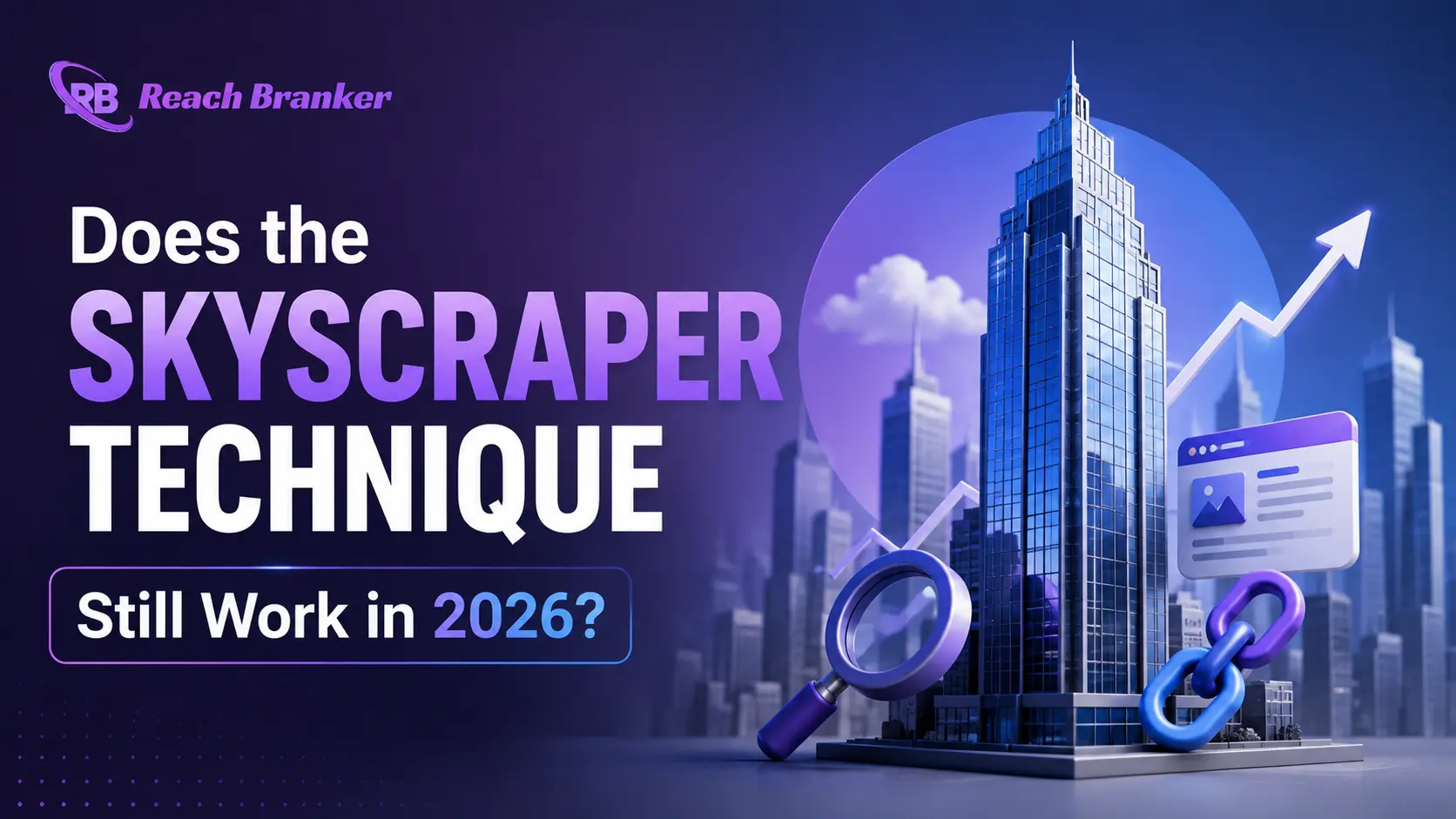
The skyscraper technique still works in 2026, but the version that worked in 2013 does not. The original approach, find a popular, heavily linked page, publish something longer, then email everyone linking to the original, has become considerably less effective simply because length alone no longer signals genuine quality, particularly with so much AI assisted content now competing for the same outreach targets.
The technique still earns links reliably when the improvement is genuinely substantive, original data, first hand expertise, or a specific gap competing content has not addressed, rather than a longer article covering the same ground in more words.
Key Takeaways
Brian Dean’s original 2013 case study, seventeen backlinks from one hundred and sixty outreach emails, remains the foundational reference point, but replicating that exact approach today produces considerably weaker results given how the competitive landscape has changed. Independent industry surveys continue to show a meaningful majority of SEO professionals reporting genuine success with skyscraper style campaigns, provided execution meets a considerably higher bar than a decade ago.
The core weakness in most failed modern skyscraper campaigns is treating length as the improvement itself, rather than genuine information gain, original data, or specific expertise competing content lacks. Editors and site owners receiving outreach pitches have grown considerably more skilled at recognizing content that looks comprehensive but contains nothing genuinely new, making superficial improvements less effective than they once were.
Established brands and well known individual creators still see stronger outreach response rates than smaller, less recognized senders, meaning genuine content quality alone does not fully offset an unfamiliar sender’s outreach disadvantage.
Table of Contents
Where the Skyscraper Technique Actually Came From What the Original Technique Actually Involved Why the Original Version Has Weakened What the Data Actually Shows in 2026 The Real Difference Between Longer and Genuinely Better How AI Generated Content Changed the Competitive Bar A Modern Step by Step Process That Actually Works The ReachBranker Modern Skyscraper Framework Who This Technique Still Favors, and Who It Does Not Common Mistakes Killing Modern Skyscraper Campaigns Expert Tips for Genuine Results in 2026 Frequently Asked Questions Conclusion
Where the Skyscraper Technique Actually Came From
The skyscraper technique was introduced by Brian Dean of Backlinko in 2013, built around a simple, intuitive metaphor, find the tallest building in a given neighborhood, in this case the most linked to page on a given topic, then build something taller. Dean’s original case study described sending one hundred and sixty outreach emails after publishing an improved resource, resulting in seventeen new backlinks and a reported doubling of organic traffic within roughly two weeks, a result that made the technique one of the most widely taught link building strategies of the following decade.
That single case study has been referenced, taught, and attempted by an enormous number of SEO professionals in the years since, which is precisely why understanding what has genuinely changed since then matters more than simply repeating the original playbook and hoping for comparable results.
What the Original Technique Actually Involved
The classic process followed three straightforward steps. First, identify a page in your niche that has already attracted a meaningful number of backlinks, confirming genuine, demonstrated link worthiness rather than guessing at what might attract links. Second, create something demonstrably better, in the original formulation, this generally meant longer, more comprehensive, and more current than the existing resource. Third, reach out directly to the websites already linking to the original page, showing them your improved version as a reasonable replacement or additional reference.
This logic remains genuinely sound as a starting framework, you are targeting sites that have already proven a willingness to link to this exact topic, which is a considerably more efficient starting point than cold outreach with no prior signal of relevance at all. What has changed is what actually counts as better in a genuinely competitive, content saturated environment.
Read More: How to Do a Competitor Backlink Gap Analysis
Why the Original Version Has Weakened
Two related shifts explain why publishing a longer version of an existing page and sending a templated outreach email now produces meaningfully weaker results than it did in 2013.
First, the sheer volume of content published on any given topic has grown enormously, meaning the original page you are trying to outdo is no longer the only meaningful competitor, dozens of other attempts at the same skyscraper approach may already exist for popular topics, each claiming to be more comprehensive than the last.
Second, and more significantly, length itself stopped functioning as a reliable proxy for genuine quality once it became trivially easy to produce long, seemingly comprehensive content without genuine additional substance behind it. Editors and site owners receiving outreach pitches have grown considerably more skeptical of pitches claiming superiority based primarily on covering more subtopics or using a higher word count, since this pattern has become extremely common and frequently disappoints once actually reviewed.
Read More: Do Nofollow Links Still Matter for SEO in 2026?
What the Data Actually Shows in 2026
Current industry data on this specific question is more encouraging than the increasingly popular is skyscraper dead narrative suggests. Recent survey data from within the SEO industry has found a meaningful majority of SEO professionals, roughly six in ten, reporting that skyscraper style link building continues to work when executed correctly, a figure that pushes back directly against the assumption that the technique has become obsolete.
At the same time, other industry reporting has found a meaningful share of marketers, roughly two in three by some counts, describing diminishing returns from traditional content improvement tactics specifically, a seemingly contradictory finding that actually reconciles cleanly once you separate execution quality from the underlying strategic logic. The technique itself remains sound, the execution most people bring to it has simply not kept pace with how much more sophisticated both the competitive content landscape and the audience evaluating outreach pitches have become.
Read More: What Is a Backlink, Types of Backlinks, and How to Build Them in 2026
The Real Difference Between Longer and Genuinely Better
This distinction sits at the center of why modern skyscraper campaigns succeed or fail, and it connects directly to the concept of information gain covered in considerably more depth elsewhere on this site. A longer article that restates the same information the original page already covers, just with more words and more subheadings, provides minimal genuine improvement regardless of its increased length.
A genuinely better version includes something the original, and ideally every other competing piece on the topic, does not already have, original data from your own research or product usage, first hand expertise grounded in real experience rather than synthesized general knowledge, current information where the original has become outdated, or a specific, well reasoned angle the existing coverage has genuinely missed.
This is a meaningfully higher bar than simply writing more, and it is exactly the bar that separates a modern skyscraper campaign that earns genuine outreach success from one that gets ignored.
How AI Generated Content Changed the Competitive Bar
The volume of AI assisted content published since 2023 has created a specific, genuinely important problem for anyone attempting a skyscraper campaign today. The baseline expectation for what counts as comprehensive coverage has risen sharply, since AI tools make it considerably easier to produce broad, seemingly thorough content quickly.
At the same time, the ceiling for genuine, original insight has not risen at all, since AI tools remain fundamentally limited to recombining and synthesizing information that already exists elsewhere, rather than genuinely generating new data or first hand experience.
This means editors reviewing outreach pitches today are considerably more practiced at recognizing content that looks thorough on the surface but contains nothing a knowledgeable reader could not already find elsewhere. The genuine competitive advantage in 2026 skyscraper campaigns lies specifically in the categories AI tools cannot manufacture from nothing, first party data, direct professional experience, and specific, checkable detail, which is precisely why these elements deserve to sit at the center of any modern campaign rather than being treated as optional additions to a fundamentally length focused strategy.
A Modern Step by Step Process That Actually Works
Start by identifying a genuinely promising target, a page in your niche with a meaningful, established backlink count, ideally targeting a topic reasonably close to a commercially important page on your own site rather than an entirely disconnected subject chosen purely for its link count.
Export the full referring domain list for that target page using a standard backlink analysis tool, then filter this list specifically for genuinely editorial sources, resource pages, roundup articles, and guides with a named, identifiable author or editor, rather than low quality directories or clearly automated listings unlikely to result in a genuine, responsive outreach relationship.
Before writing anything, identify specifically what the existing page is missing, outdated statistics, absent original data, thin coverage of a subtopic real searchers care about, or simply a lack of any genuinely first hand perspective. This gap analysis step deserves as much attention as the writing itself, since it determines whether your eventual content actually clears the genuine improvement bar or simply restates existing coverage at greater length.
Build your improved resource specifically around whatever gap this analysis revealed, prioritizing original data, specific detail, and current information over simply expanding word count for its own sake. Once published, run genuinely personalized outreach to each identified target, referencing the specific gap your content fills relative to what they currently link to, rather than a generic message claiming general superiority with no specific justification offered.
The ReachBranker Modern Skyscraper Framework
We apply a four part standard before greenlighting any skyscraper style campaign for a client.
- Genuine gap identification, confirmed through direct review of the target page and its closest competitors, not assumed based on word count comparison alone.
- At least one category of genuine information gain present, original data, first hand expertise, or meaningfully more current information than what currently exists.
- Outreach target quality, filtered specifically for genuinely editorial, relevant sites with an identifiable author or editor, rather than low quality or automated listings.
- Personalized outreach requirement, every pitch referencing the specific gap being filled for that specific recipient, never a templated message sent unchanged across every target.
- A campaign failing any of these four checks is unlikely to produce meaningful results in the current competitive environment, regardless of how much time and writing effort goes into the content itself.
Who This Technique Still Favors, and Who It Does Not
It is worth being honest about a genuine limitation independent of content quality entirely. Established brands and well known individual writers consistently see meaningfully stronger outreach response rates than smaller, less recognized senders, simply because recipients already have some baseline familiarity and trust before the pitch even arrives.
This does not mean the technique is unusable for smaller or newer businesses, but it does mean realistic expectations matter, a smaller, less established sender should expect to need more targets, more genuinely differentiated content, and more patience to achieve comparable results to what a recognized industry name might achieve with a similar campaign. Building genuine brand recognition over time, through consistent guest posting, digital PR, and community presence covered extensively elsewhere on this site, gradually improves this outreach response dynamic for future campaigns.
Common Mistakes Killing Modern Skyscraper Campaigns
Equating better with longer, publishing an expanded version of existing content with no genuine new substance behind the additional length.
- Skipping genuine gap analysis, choosing a target based purely on its backlink count without actually reviewing what it covers well and where it genuinely falls short.
- Sending generic, templated outreach emails claiming general superiority without referencing the specific, concrete improvement relevant to that particular recipient’s original link.
- Targeting low quality or automated directory style sites simply because they appear in a backlink export, rather than filtering specifically for genuinely editorial, relevant sources likely to respond to outreach at all.
- Relying entirely on AI generated content to build the improved resource, missing the genuine original data and first hand expertise that increasingly separates a successful modern campaign from one that gets ignored.
Expert Tips for Genuine Results in 2026
Prioritize topics where you or your business genuinely have first hand data or experience to contribute, since this is precisely the advantage competing, purely synthesized content cannot replicate. Spend genuine time on gap analysis before writing begins, treating this step as equally important as the content creation and outreach that follow it. Filter outreach targets aggressively for genuine editorial legitimacy, a smaller list of genuinely relevant, responsive targets outperforms a larger list padded with low quality or automated sites.
Personalize every single outreach message with the specific gap being addressed for that particular recipient, never reusing an identical message across your full target list. Treat skyscraper campaigns as a periodic, planned initiative built around genuinely available original data or expertise, rather than a tactic to attempt continuously without a fresh, substantive angle each time.
Conclusion
The skyscraper technique has not become obsolete, but the version most people still attempt, publish something longer, send a generic outreach email, has become considerably less effective as content volume has grown and editors have grown more skeptical of surface level comprehensiveness. The technique’s underlying logic, target proven link worthy topics rather than guessing, remains genuinely sound in 2026.
What separates a successful modern campaign from a wasted one comes down to a single, consistent theme running throughout this guide, genuine information gain, original data, first hand expertise, and specific improvement, rather than length treated as an end in itself. Businesses willing to do this harder, more substantive work continue to find the skyscraper technique a genuinely reliable path to earning quality editorial backlinks, even as the easier, more superficial version of the tactic has largely stopped working.
Talk to Our Team About a Modern, Data Driven Content and Outreach Strategy. Explore Our Link Building Services.
Frequently Asked Questions
Is the skyscraper technique dead in 2026?
No, current survey data continues to show a meaningful majority of SEO professionals reporting genuine success with the technique, though the execution bar required to succeed has risen considerably since it was first introduced.
Does making content longer still help with skyscraper campaigns?
Not on its own, length alone no longer signals genuine quality to editors or search engines. The improvement needs to come from genuine information gain, original data, or specific expertise rather than word count alone.
How is the modern skyscraper technique different from the original 2013 version?
The core three step logic remains the same, but the modern version requires considerably more substantive improvement, original data and first hand expertise specifically, rather than simply publishing a longer version of the existing top ranking page.
Can a small business or new website realistically use this technique?
Yes, though smaller or newer senders should expect lower outreach response rates than established brands and should compensate with a larger target list, more genuinely differentiated content, and realistic patience regarding overall campaign timelines.
What is the biggest reason modern skyscraper campaigns fail?
Treating length as the improvement itself, rather than identifying and filling a genuine content gap through original data, first hand expertise, or meaningfully more current information than existing coverage.
How do I find good skyscraper targets?
Use a standard backlink analysis tool to identify pages in your niche with an established, meaningful backlink count, then filter for topics reasonably connected to your own commercially important pages rather than choosing purely by link count alone.
Does AI generated content work for skyscraper campaigns?
Generally not well on its own, AI tools can assist with research organization and outreach drafting, but the genuine competitive advantage in modern skyscraper campaigns comes specifically from original data and first hand expertise that AI tools cannot manufacture independently.
How does the skyscraper technique relate to information gain?
They describe closely related ideas. Information gain is the broader principle that content needs to offer something genuinely new relative to existing coverage, while the skyscraper technique is a specific, structured method for identifying a target and building content that satisfies this exact principle.