Quick Answer
Nofollow links use a specific attribute telling search engines not to pass ranking credit, or link equity, to the linked page, but they still matter for SEO in 2026 in several genuine ways. They can drive real referral traffic, they contribute to a natural, diversified backlink profile that search engines expect to see, and Google has clarified that nofollow is treated as a hint rather than a strict directive, meaning some nofollow links may still influence rankings in certain circumstances. Dismissing nofollow links as entirely worthless is an outdated view that does not reflect current best practice.
Key Takeaways
Nofollow, sponsored, and user generated content attributes tell search engines not to pass ranking credit by default, but Google treats these as hints rather than absolute rules. A backlink profile made up entirely of dofollow links can itself look unnatural, meaning some nofollow presence supports a healthier overall link profile. Nofollow links can still drive genuine referral traffic and contribute to brand visibility and entity association, independent of direct ranking impact. Major platforms including many social networks, forums, and large publications use nofollow by default, meaning avoiding all nofollow links would mean avoiding some of the most legitimate, high traffic sites available. Chasing dofollow links exclusively, while ignoring genuinely valuable nofollow opportunities, is a common and avoidable strategic mistake.
What Nofollow Actually Means
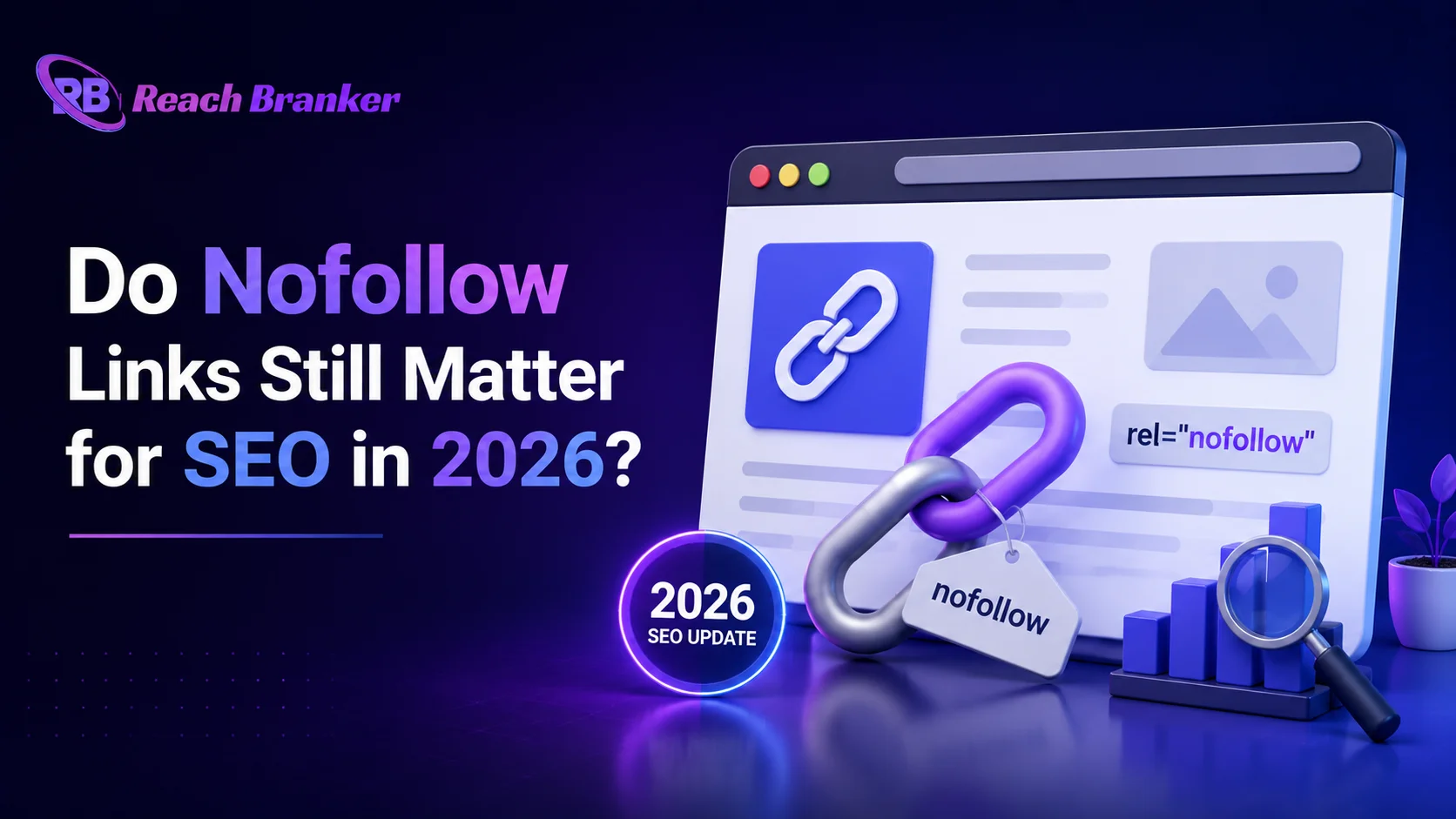
Nofollow is an HTML attribute, added to a hyperlink, that tells search engines not to pass ranking credit, often called link equity, from the linking page to the destination page. It was introduced years ago primarily to address comment spam, giving site owners a way to include links within user submitted content, blog comments and forum posts especially, without those links counting as an editorial endorsement for ranking purposes.
Over time, nofollow expanded well beyond its original comment spam use case, becoming the standard attribute for paid links, affiliate links, and any link a site owner does not want to formally vouch for in the eyes of search engines. This expanded use case is worth understanding clearly, since much of the ongoing confusion around nofollow stems from conflating its original narrow purpose with its current, considerably broader application across many different link contexts across the modern web.
The Three Related Attributes, Nofollow, Sponsored, and User Generated Content
Google introduced two additional, more specific attributes alongside the original nofollow tag, giving site owners a more precise way to categorize different link types.
- Sponsored indicates a link exists as part of an advertising, sponsorship, or other paid arrangement, the appropriate attribute for affiliate links and paid placements specifically.
- User generated content indicates a link exists within content submitted by site visitors rather than the site’s own editorial team, appropriate for comments, forum posts, and similar submissions.
- Plain nofollow remains available as a general purpose option covering any case not specifically captured by the other two, and all three attributes are treated similarly by Google as hints rather than absolute directives.
Why Google Now Treats Nofollow as a Hint, Not a Rule
For years, nofollow functioned as a strict directive, search engines would categorically not consider these links for ranking purposes at all. Google later shifted this treatment, announcing that nofollow, along with sponsored and user generated content attributes, would be treated as hints Google may choose to consider when crawling and indexing, rather than an absolute rule guaranteed to exclude the link from any ranking consideration whatsoever.
In practice, this means Google retains discretion to use even a nofollow link as a signal in certain circumstances, particularly where the overall pattern of many nofollow links pointing to a page suggests genuine relevance and popularity, even without any single link formally passing full ranking credit.
Does a Nofollow Link Pass Any SEO Value
The honest, current answer sits between the two extremes people commonly assume. A nofollow link does not pass the same direct ranking credit a genuine editorial dofollow link does, and site owners should not expect a nofollow link to function identically to a dofollow one for pure ranking purposes.
However, nofollow links still contribute in several genuine, meaningful ways beyond direct ranking credit, referral traffic when someone actually clicks the link, brand visibility and entity association when a reader encounters your brand name and site in context, and a contribution to what search engines generally recognize as a natural, diversified overall backlink profile, which itself indirectly supports how trustworthy your site’s broader link profile appears.
The Case for Actively Wanting Some Nofollow Links
This is a genuinely counterintuitive point worth stating directly. A backlink profile made up entirely of dofollow links, with zero nofollow presence at all, can itself look unnatural to search engines, since a genuinely organic link profile accumulated over time from real world sharing, social media mentions, forum discussion, and varied sources naturally includes a meaningful share of nofollow links.
This means actively avoiding nofollow opportunities, in pursuit of a purely dofollow backlink profile, can work against the natural diversity search engines generally expect to see from a site with genuine, organic popularity and discussion happening across the web.
Where Nofollow Links Commonly Appear
Major social media platforms apply nofollow by default to links shared within posts and profiles, meaning any social sharing of your content, regardless of how much genuine engagement it generates, produces nofollow links at scale. Many large, well established publications and forums apply nofollow by default to comments and user submitted content, and some apply it broadly across all outbound links regardless of source, as an editorial policy choice.
Wikipedia applies nofollow to essentially all outbound links, meaning a Wikipedia citation, while carrying genuine reputational and traffic value, does not pass direct ranking credit despite being one of the most visible, high authority sites on the internet. Sponsored content, paid placements, and affiliate links should use nofollow or sponsored attributes by policy, meaning any legitimate paid link building activity should expect nofollow status as standard, appropriate practice.
How to Check Whether a Link Is Nofollow
Viewing a page’s HTML source code directly reveals whether a specific link includes a nofollow, sponsored, or user generated content attribute, visible within the anchor tag itself. Most backlink analysis tools, including those commonly used for broader SEO work, also flag link type automatically within their reporting, saving the need to manually inspect source code for every link in a larger backlink profile.
The ReachBranker View on Link Type Diversity
We do not treat nofollow links as worthless, nor do we treat them as equivalent to dofollow links for direct ranking purposes. Every campaign we run naturally produces a mix of both, reflecting how genuine, organic link acquisition actually works across guest posting, digital PR, and broader brand visibility efforts, rather than artificially forcing every single placement toward dofollow status regardless of what a specific opportunity naturally warrants.
This approach produces a more genuinely natural, defensible backlink profile than a strategy singularly obsessed with dofollow links at the expense of otherwise valuable nofollow opportunities.
A Practical Example: Reading a Real Backlink Profile
Consider a backlink profile review revealing forty links total, twenty eight nofollow and twelve dofollow. A site owner unfamiliar with current best practice might see this as concerning, assuming a healthy profile should be predominantly dofollow. In reality, this specific mix, heavy on social shares, forum mentions, and a handful of genuine editorial dofollow placements, closely resembles what a genuinely organic, real world backlink profile actually looks like for a business receiving authentic social sharing and community discussion alongside deliberate link building effort.
A profile showing the reverse pattern, forty links with thirty eight dofollow and only two nofollow, would actually warrant more scrutiny, since this concentration is considerably less typical of organic, real world link acquisition and more consistent with a purely deliberate, potentially manipulative link building effort with little genuine organic activity behind it.
Common Mistakes Around Nofollow Links
Dismissing every nofollow opportunity entirely, ignoring genuine referral traffic, brand visibility, and profile diversity value simply because direct ranking credit is not passed.
- Pursuing a backlink profile made up entirely of dofollow links, inadvertently creating an unnatural looking pattern that itself can raise scrutiny rather than confidence.
- Failing to use sponsored or nofollow attributes appropriately on paid or affiliate links, creating genuine compliance risk with search engine guidelines around undisclosed paid links.
- Assuming nofollow links provide zero value whatsoever, when Google’s own guidance explicitly describes them as hints it may still consider in certain circumstances, not links guaranteed to be entirely ignored.
- Overlooking major, legitimate high traffic platforms, social media, large forums, Wikipedia, simply because their links carry nofollow status, missing genuine visibility and traffic opportunity as a result.
Expert Tips for Building a Genuinely Natural Profile
Do not filter out otherwise valuable placement opportunities purely because they carry nofollow status, evaluate genuine relevance and traffic potential instead. Ensure all paid, sponsored, or affiliate links use the correct sponsored or nofollow attribute, maintaining compliance with search engine guidelines around link disclosure. Track referral traffic from nofollow sources separately from ranking impact, recognizing this as a genuine, measurable value distinct from direct SEO credit.
Aim for a reasonable natural mix across your overall backlink profile rather than either extreme, purely nofollow or purely dofollow, both of which can appear less organic than a genuinely varied profile. Remember that brand mentions and entity association from nofollow sources still contribute to how both traditional search engines and AI systems build a broader picture of your brand’s credibility and relevance.
A Note on Historical Context Worth Understanding
Nofollow’s original introduction was specifically a response to widespread comment spam in the mid two thousands, when automated tools were flooding blog comment sections with links purely to manipulate rankings. Understanding this origin helps explain why the attribute exists at all and why treating it as inherently negative misunderstands its actual purpose, it was created to preserve open, functional comment sections and user submitted content without those areas becoming a manipulation vector, not to signal that a link or the page it points to is somehow lower quality.
This context is worth keeping in mind whenever nofollow gets discussed as though it were a penalty rather than a genuinely useful, purpose built tool that has simply expanded well beyond its original narrow use case over time.
Conclusion
Nofollow links are not worthless, and treating them as such reflects an outdated understanding that has not kept pace with how Google actually handles these attributes today, as hints it may still consider, not links guaranteed to be entirely disregarded. Beyond potential ranking consideration, nofollow links contribute genuine referral traffic, brand visibility, and profile diversity that a purely dofollow focused strategy would miss entirely.
The more accurate, current view treats nofollow and dofollow links as different tools serving different purposes within a genuinely natural, well rounded backlink profile, not a strict hierarchy where one type is worth pursuing and the other is not.
Talk to Our Team About Building a Genuinely Natural Backlink Profile. Explore Our Link Building Services.
Frequently Asked Questions
Should I ask publishers to remove nofollow from my links whenever possible? +
Not universally. Appropriate use of nofollow, particularly for paid or sponsored content, is correct practice, and requesting removal in these cases can create compliance risks.
Do nofollow links help with AI search visibility even without passing traditional ranking credit? +
Brand mentions generally, including those within nofollow links, may contribute to entity association and AI search visibility independently of traditional ranking credit.
Is it worth pursuing guest posts on sites that only offer nofollow links? +
It depends on the site’s relevance and traffic. A nofollow placement on a relevant, high-traffic site can still provide referral traffic, exposure, and brand visibility.
How can I tell if Google is still considering a nofollow link as a signal in my specific case? +
There is no direct, reliable way to confirm this for an individual link because Google’s treatment of nofollow as a hint is an internal process that site owners cannot directly verify.
Does a high percentage of nofollow links in my backlink profile hurt my rankings? +
Not inherently. A natural backlink profile can contain both link types. A high nofollow percentage may indicate weaker link acquisition only when combined with very few genuine editorial links.
Should link building campaigns specifically target nofollow opportunities? +
Not as a primary goal. However, relevant, high-traffic nofollow opportunities should not be dismissed when they can provide meaningful referral traffic or brand visibility.
What is the difference between nofollow and a broken or redirected link? +
They are different concepts. Nofollow is an attribute affecting how a link is treated, while broken or redirected links are technical issues affecting how the link functions.
Do internal links on my own site need to worry about nofollow at all? +
Generally no. Nofollow is primarily relevant to external links, while internal links should normally remain followed to support crawling and indexing.
Should I use nofollow on outbound links to competitors mentioned in my own content? +
This is an editorial choice rather than a strict requirement. Some sites use nofollow for competitor mentions, but it depends on your content strategy and policy.