Quick Answer
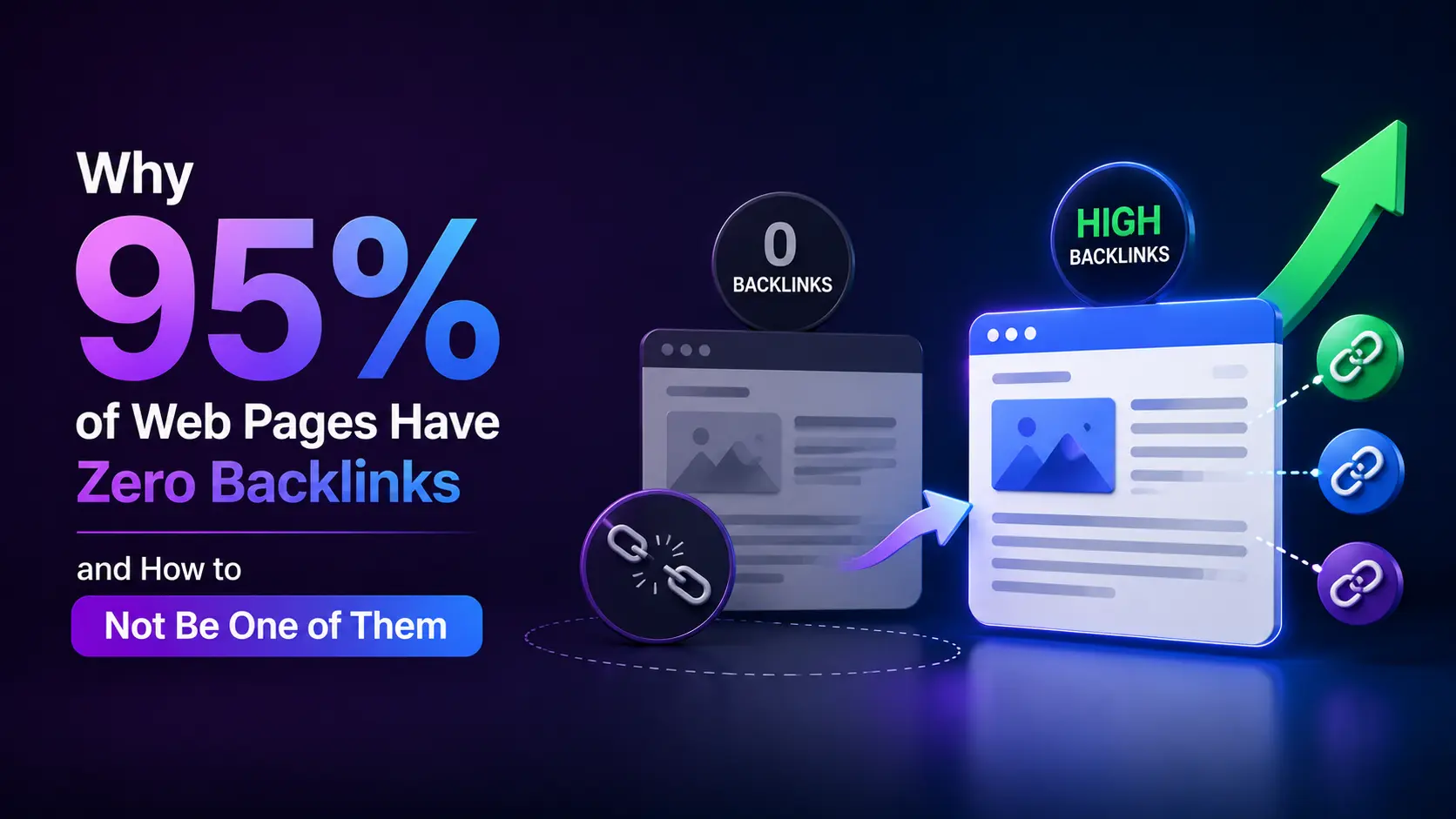
Independent research into large samples of indexed web pages has repeatedly found that somewhere above ninety percent, commonly cited around ninety-five percent, of all pages have zero external backlinks pointing to them at all. This happens because most published content is never actively promoted beyond publication, rarely offers genuine information beyond what already exists, and is never specifically pitched to anyone who might plausibly link to it. The small share of pages that do earn links tend to share identifiable traits: genuine originality, active outreach, and content specifically built to be worth referencing, not just informative.
Key Takeaways
The vast majority of published web pages never earn a single external backlink, according to multiple independent large-scale studies. Publishing content alone very rarely earns links on its own, regardless of quality, without some form of deliberate promotion or outreach. Pages that do earn links consistently share specific traits, including genuine originality, data or research, and a format that makes referencing easy. Passive content marketing, publishing and hoping, is one of the most common and avoidable reasons a page ends up in the majority with zero links. Building link worthiness into content from the planning stage produces dramatically better results than trying to promote already published, generic content after the fact.
Where This Statistic Actually Comes From
Large-scale backlink studies analyzing samples of billions of indexed web pages have consistently found that the overwhelming majority never earn a single external backlink. Different studies using different methodologies and different sample sizes tend to converge on figures somewhere in the ninety to ninety-six percent range, which is a remarkably consistent finding across independent research given how differently these studies are typically conducted.
This is not a claim about low-quality content specifically. Many pages within that majority are perfectly accurate, reasonably well written, and genuinely informative. The absence of backlinks reflects something separate from basic content quality, which is exactly why understanding the actual cause matters more than simply concluding that most content on the internet is bad.
Why So Much Content Earns Zero Links
Several distinct, identifiable reasons explain why the overwhelming majority of pages end up with no backlinks at all.
- Most content restates existing information rather than adding anything genuinely new. A page that summarizes the same points already covered thoroughly by dozens of existing pages gives another site owner no compelling reason to link to this specific version over any of the many already established alternatives.
- Most content is never actively promoted to anyone who might plausibly link to it. Publishing a page and simply waiting for links to accumulate organically almost never works in practice, regardless of quality, because the page has no visibility path to the people who would need to discover and reference it.
- Most content lacks a genuinely referenceable format. Pages built primarily as narrative prose, without data, original research, tools, or other clearly citable elements, are simply harder for another writer to reference concretely compared to content built around specific, quotable, linkable elements.
Most businesses publish content as a volume exercise rather than a deliberate linkability exercise. A content calendar built around hitting a publishing frequency target, rather than around identifying which specific pieces are genuinely worth the additional investment required to make them link-worthy, produces a large volume of forgettable content and very little that earns organic attention.
What the Small Percentage of Linked Pages Actually Have in Common
Pages that do successfully earn backlinks, across the studies examining this pattern, consistently share several identifiable traits. Original data or research that did not exist elsewhere before this page created it. Original surveys, original analysis of existing data sets, and original case study results all give other writers something genuinely new to reference that they cannot get from any other single source.
A clearly citable, specific format. Statistics, defined frameworks, structured comparisons, and clear, quotable statements are far easier for another writer to reference concretely than a page consisting entirely of general narrative discussion.
Active promotion and outreach following publication. Even genuinely excellent, link-worthy content typically requires deliberate outreach to relevant writers, journalists, and site owners who might plausibly reference it, rather than depending entirely on passive discovery.
Sufficient depth to serve as a definitive reference on its specific topic. Pages that comprehensively answer a specific question, becoming the single most complete resource available on that narrow topic, naturally attract more references than a page covering the same ground only partially.
The Difference Between Informative and Link Worthy
A genuinely important distinction sits at the heart of this entire pattern. Informative content answers a reader’s question accurately and helpfully. Link-worthy content does something additional beyond that: it gives another writer a specific, concrete reason to reference this particular page rather than simply mentioning the topic in their own words without any citation at all.
A well-written explanation of what guest posting is, however accurate and clear, is informative but rarely link-worthy on its own, since any writer wanting to reference this basic concept has dozens of similarly accurate existing explanations already available to reference or simply restate in their own words. A page presenting original survey data on actual guest posting pricing across a genuine sample of real vendors is both informative and specifically link worthy, since another writer discussing pricing now has a concrete, original data point that exists nowhere else to reference and cite directly.
This distinction should directly shape content planning. Every piece of content can reasonably aim to be informative. Not every piece needs to specifically aim to be link worthy, but the pieces you specifically want to earn organic links need to be deliberately built with this additional, more demanding standard in mind from the outset.
Building Content With Link Worthiness Planned In From the Start
Retrofitting link worthiness onto already published, generic content rarely works well. The traits that make content link worthy, particularly original data and genuinely comprehensive depth, are far more effectively built into a piece from the initial planning stage than added afterward as a promotional afterthought.
When planning content specifically intended to earn organic links, ask during the planning stage whether this piece will include something genuinely original that does not currently exist elsewhere, whether it will be built in a format another writer could easily reference and cite, and whether it will be comprehensive enough to plausibly become the single best available resource on its specific, narrow topic. If the honest answer to all three questions is no, the piece may still be genuinely useful and worth publishing, but it should not be treated as a piece expected to organically earn significant backlinks without substantial additional promotional effort.
Outreach Still Matters Even for Genuinely Good Content
It is worth being direct about something the zero backlink statistic makes clear: even excellent, genuinely link worthy content very often still requires active outreach to actually earn links, rather than accumulating them purely through organic discovery. The internet is simply too large and too noisy for even genuinely superior content to reliably surface to the specific people who would plausibly link to it, without some form of deliberate visibility effort.
This does not diminish the importance of building genuinely link worthy content in the first place. It means treating content creation and outreach as connected, sequential steps within a single strategy, rather than assuming sufficiently good content will promote itself once published. The businesses earning consistent organic backlinks are very rarely relying purely on content quality alone. They are combining genuinely link worthy content with deliberate, targeted outreach to people specifically likely to reference it.
A Practical Framework for Avoiding the Zero Link Majority
Before publishing a piece specifically intended to earn organic backlinks, run it through this framework.
- Originality check. Does this piece contain something genuinely new, whether original data, original analysis, or a genuinely novel framework, that does not already exist in easily discoverable form elsewhere.
- Citability check. Is the core value of this piece presented in a specific, quotable, easily referenced format, rather than embedded only within general narrative discussion.
- Comprehensiveness check. Would a genuine subject matter expert reviewing this piece conclude it represents the single most complete treatment of this specific, narrow topic currently available.
- Outreach readiness check. Has a specific list of people, publications, or sites plausibly interested in referencing this content been identified and prepared for outreach, rather than leaving promotion as an undefined afterthought.
A piece passing all four checks has a genuinely reasonable chance of earning organic backlinks. A piece failing several of these checks is very likely headed toward the zero backlink majority regardless of how accurate or well written it otherwise is.
A Practical Example: Two Pieces on the Same Topic
Consider two pieces published around the same time, both covering guest posting pricing. The first summarizes commonly known pricing ranges already discussed across many existing articles, written clearly and accurately but without any original research behind it. This piece, however well written, offers nothing a referencing writer could not already find and cite from several existing established sources, and it predictably ends up among the majority earning no organic backlinks.
The second piece surveys a genuine sample of actual guest posting vendors, compiling original pricing data that did not exist in this specific form anywhere else beforehand, presented in a clear, citable table. This piece gives other writers discussing the same general topic a concrete, original, specific data point unavailable elsewhere, and it earns a meaningful number of organic references precisely because it offers something genuinely new rather than simply restating existing knowledge more clearly.
The difference between these two outcomes was not writing quality, both were well written, it was the deliberate decision to invest in original data collection for one piece and not the other.
Common Mistakes That Guarantee a Page Earns No Links
- Publishing content purely to hit a volume or frequency target, without any specific piece being deliberately built for link worthiness.
- Restating existing, widely available information without adding any genuinely original data, analysis, or framework.
- Assuming genuinely good content will be discovered and linked to organically, without any deliberate promotional or outreach effort following publication.
- Building content entirely as narrative prose with no specific, easily citable elements such as statistics, defined frameworks, or structured comparisons.
- Treating every single piece of content as equally worth significant additional investment, rather than identifying a smaller number of pieces specifically worth the extra effort required for genuine link worthiness.
Expert Tips for Joining the Minority
Identify a small number of priority topics each quarter specifically worth the additional investment required for genuine link worthiness, rather than attempting this standard across every single piece published. Build original data collection into your regular content process, even something as straightforward as a simple survey or analysis of your own existing customer or campaign data. Prepare a specific outreach list before publishing any piece intended to earn organic links, rather than treating outreach as something to figure out only after the content already exists.Track which of your existing pieces have earned organic backlinks, and study what specifically differentiates them from your content that has not, using your own results as an ongoing feedback loop. Revisit and strengthen existing high potential pieces that narrowly missed being genuinely link worthy, rather than only focusing effort on entirely new content going forward.
Conclusion
The fact that the overwhelming majority of published web pages never earn a single backlink is not really a mystery once the underlying causes are understood. Most content restates existing information, lacks a genuinely citable format, and is never actively promoted to anyone who might plausibly reference it. None of these causes are unfixable, but fixing them requires treating link worthiness as a deliberate planning decision made before content is created, rather than something to hope for after publication.
The businesses consistently earning organic backlinks are not simply publishing more content than everyone else. They are being deliberate about which specific pieces are worth building with genuine originality and comprehensive depth, and following through with real outreach once that content exists.
Frequently Asked Questions
No. A page can be accurate and useful without backlinks. Zero backlinks usually reflect limited originality or promotion rather than poor content quality.
No. Focus link-building efforts on content specifically designed to earn links, while allowing other content to primarily serve readers.
There is no universal benchmark. Original, well-promoted content can often earn several quality referring domains when supported by genuine outreach.
Yes. Adding original data, improving its structure, and conducting targeted outreach can increase an existing page’s link-earning potential.
Not exactly. The general pattern is broad, but percentages and link-earning factors vary by niche, competition, and the quality of existing content.
Exceptional content can sometimes earn links organically, but deliberate outreach is usually needed to consistently generate quality backlinks.
Invest in genuinely original data or research instead of only creating content that repeats information already available online.